

July 16 felt like one of those Product Hunt days where the highest-ranking launches were not just competing on novelty, but on clarity. The products that rose to the top were mostly easy to describe in a single sentence, yet each one tried to solve something that feels increasingly real for builders: how people learn, how agents work, how teams automate, and how AI fits into daily workflows without adding more friction.
What makes this launch day interesting is the range of instincts behind it. Some teams leaned into infrastructure and trust, others into interface design, and a few into a sharper promise around outcomes. The vote and comment counts suggest that Product Hunt voters were especially responsive to products that were concrete, legible, and attached to a familiar pain point. That is a useful signal for founders: even in a crowded AI-heavy cycle, the products that land are usually the ones that make their value feel operational rather than abstract.
1Paradigm
 Paradigm took the top spot with 638 votes and 126 comments, and that level of response makes sense for a product that frames itself as a new way to approach learning. Instead of offering another generic course catalog or study app, it says it can turn any goal into a personalized, adaptive learning path. That is a strong positioning move because it gives users a clear outcome while also hinting at a more individualized process underneath.
The description suggests Paradigm is trying to make education feel less like a fixed curriculum and more like a guided journey that adjusts as someone progresses. That idea likely helped it resonate with founders and builders who are used to thinking in systems and feedback loops. The rank result points to a product that did not just sound useful, but felt ambitious in a way Product Hunt audiences tend to appreciate when the promise is easy to understand. In a day crowded with AI tools, Paradigm stood out by making the future of learning feel personal rather than purely automated.
2Zro
 Zro finished second with 465 votes and 65 comments, and its pitch is all about trust and performance. It offers private inference for coding agents, with fast open-model inference on multi-region infrastructure and zero request retention. That combination matters because it speaks directly to a real concern in the agent era: teams want speed, but they also want to know their prompts and code are not being stored indefinitely.
The product’s positioning is deliberately technical, but not obscure. It does not try to reframe coding agents as a philosophical shift; it gives them a better backend. That likely helped it earn strong traction from an audience that understands the difference between a flashy wrapper and infrastructure that can actually support production use. The vote count suggests the market is rewarding products that solve the uncomfortable parts of AI adoption, especially when the promise is both privacy and reliability.
3Albato AI
 Albato AI came in third with 334 votes and 55 comments, and it is clearly aiming at the point where workflow automation starts to feel more like conversation than configuration. The product lets users build AI-driven workflows across more than 1,000 apps, with a Copilot that helps create automations and AI Agents that can execute tasks from natural language requests. It also adds Canvas mode for visualizing flows, which suggests the team knows that even AI-assisted automation still needs structure.
That balance between conversational creation and visual control is probably part of why it landed well. Many builders have seen automation tools promise simplicity only to become brittle in practice, so Albato AI’s focus on testing individual steps with real data and sharing automations easily gives the product more operational credibility. Its rank and comment volume suggest a launch that felt practical rather than speculative, which is often what gets people to engage when the category is crowded.
4Codex Micro
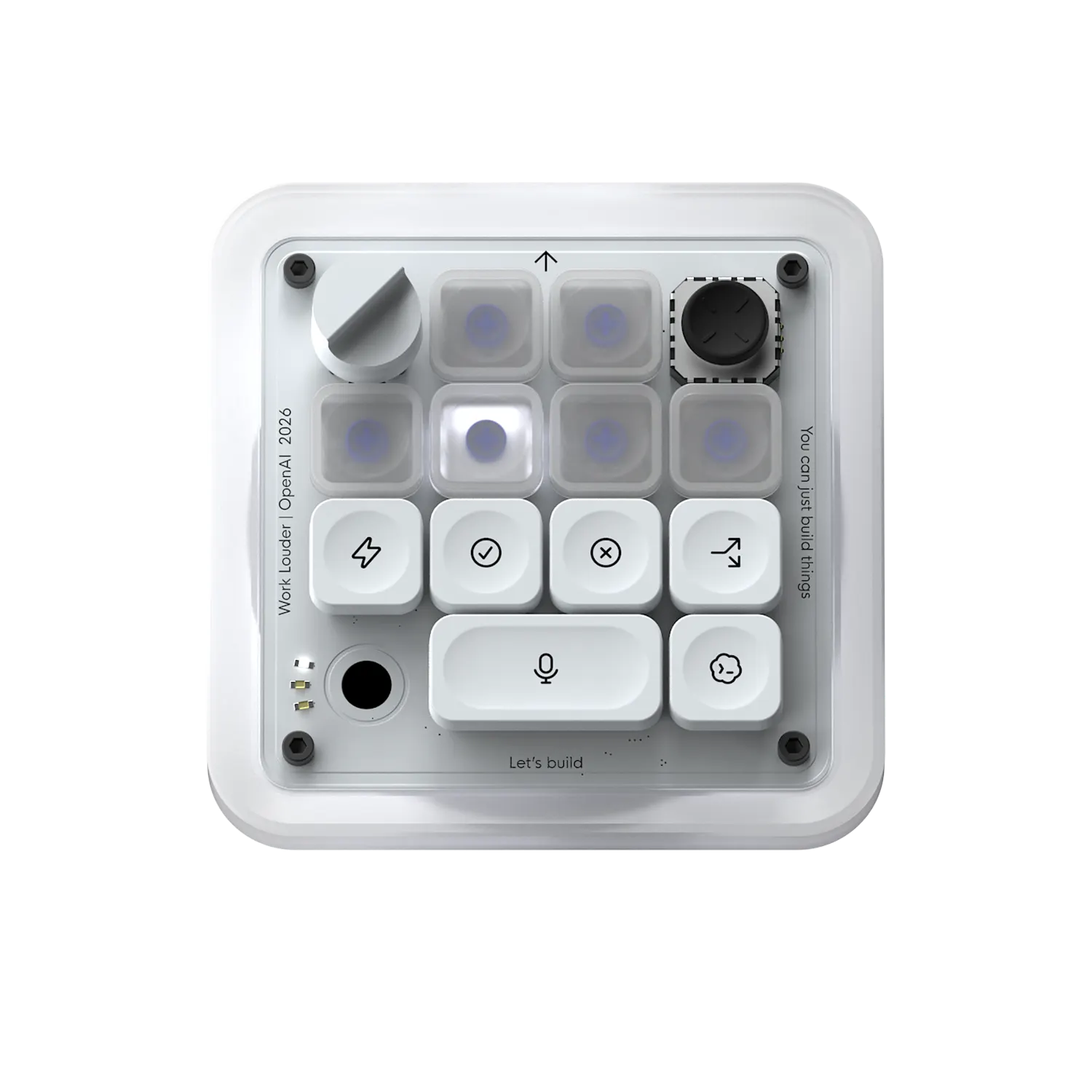 Codex Micro landed at rank four with 253 votes and 10 comments, and it is one of the more tangible products on the board. Built with Work Louder, it is a compact keyboard designed to control Codex agents through physical keys for common skills, a dial for reasoning levels, and RGB status lights that show agent progress. The product is not trying to compete as software alone; it is making the case that agent management deserves dedicated hardware.
That idea is unusual enough to draw attention, but also specific enough to feel real. The low comment count relative to the votes suggests people may have been drawn quickly to the novelty and utility of the form factor without feeling the need to debate it at length. For founders, that is instructive: a product can earn strong interest when it translates an abstract workflow into something tactile and observable. Codex Micro makes agent control visible, and that kind of physical clarity can be memorable in a way a dashboard rarely is.
5River
 River reached fifth place with 252 votes and 44 comments, and its pitch is built around one of the most commercially intense promises of the day: AI account executives that demo and close B2B deals. The product says it can join a live call instantly when a lead enquires, run the demo, handle objections, and close the sale so prospects do not wait for a rep’s calendar. That is a crisp articulation of value, and it targets a pain point every revenue team understands.
The launch also carries a credibility signal in the form of backing from founders of Ramp, Kalshi, and Lean, which likely helped it stand out among other AI sales tools. Still, the positioning does more work than the social proof. River is not selling generic conversational automation; it is making a focused bet on speed to response and end-to-end sales execution. The vote result suggests that Product Hunt voters responded to both the ambition and the sharp operational use case, especially in a category where many products stop at lead capture.
6Nitrosend
 Nitrosend ranked sixth with 170 votes and 29 comments, and its concept is easy to grasp even if the category is still emerging. It is email for AI agents, letting them sign up, send, and reply. The product description makes clear that the team is not just adding AI to email, but rethinking email as an operational layer that agents can use directly, with humans approving while agents operate.
What likely helped Nitrosend stand out is the specificity of the workflow. It covers marketing email, transactional email, real inboxes on a user’s own domain, and one-to-one customer replies with human escalation. That breadth gives the launch substance, but the framing keeps it simple. The comment and vote totals suggest a healthy amount of curiosity, probably because the product addresses a question many founders are now asking: if agents are going to do real work, what systems will they need to communicate through? Nitrosend offers one answer in a form that feels ready for experimentation.
7The Eureka Database
 The Eureka Database came in seventh with 173 votes and 25 comments, and it has one of the most founder-friendly premises of the day. The product is a library of ideas mined from real complaints on Reddit, reviews, and forums, with receipts that show who wants the solution, who is already profitable, and what a working demo might look like. In other words, it tries to turn vague inspiration into evidence-backed opportunity discovery.
That positioning is clever because it speaks to a persistent frustration in startup building: too many ideas are easy to generate and hard to validate. By connecting to MCP and letting an AI agent pull a full build spec from saved ideas, the product adds a layer of operational usefulness on top of idea sourcing. Its rank suggests solid interest rather than explosive hype, but for a tool like this, that may be enough. The audience here is likely evaluating usefulness through the lens of founder workflow, and the product’s emphasis on receipts and build specs gives it more credibility than a generic idea generator would have.
8Manta AI
 Manta AI placed eighth with 152 votes and 28 comments, and it targets a problem that almost every product team understands: keeping tests aligned with a changing web app. The launch describes an autonomous testing agent that can explore a product like a real user, map flows, find bugs, and generate self-healing test cases. Users can also describe flows in plain English, which lowers the barrier for teams that do not want to write scripts for every change.
The product’s ability to run locally and test apps behind a firewall, on a private network, or even on localhost gives it additional weight. That is the kind of detail that tends to matter to teams evaluating whether an AI tool is actually usable in real environments. The vote total is modest compared with the top three, but the launch clearly earned attention from people who care about technical reliability. What likely helped Manta AI stand out is that it makes the promise of autonomous testing feel less like a demo and more like infrastructure a team could fold into its process.
9Nuvio
 Nuvio ranked ninth with 154 votes and 21 comments, and it is one of the more immediately practical launches for founders who care about social proof. The product connects an X bio to MRR and GA4 so profile metrics can update automatically, with Stripe, Google Analytics, and Search Console providing the real numbers. That removes the stale, manually edited claims that often make founder profiles feel outdated within days.
The positioning is smart because it focuses on authenticity as much as visibility. Rather than promising growth itself, Nuvio promises that the numbers people already want to display will stay current and verified. That likely helped the product appeal to indie makers and early-stage founders who treat their public profile as part of their distribution strategy. The vote and comment numbers suggest a niche but motivated audience, which makes sense for a tool that solves a narrow but recognizable pain point with clear utility.
10In Parallel MCP
 In Parallel MCP closed the top 10 with 130 votes and 28 comments, and its message is aimed straight at one of the daily annoyances of modern knowledge work. The product says your context should be available to every agent, so you do not have to re-explain your company to ChatGPT, Claude, or Copilot every time you start a new chat. By connecting an MCP server once, the AI you open already knows your meetings, decisions, and context.
That is a strong use case because it is easy to recognize and easy to feel. The launch leans into a simple promise, which may be why it earned attention despite coming in lower than some of the more visibly flashy products. The phrase “Less prose. More truth.” captures the product’s worldview well and likely helped sharpen its identity. For founders, In Parallel MCP is a reminder that products can win by attacking repetition and context loss, two problems that are becoming more painful as teams spread their work across more AI tools.
What founders can learn from this launch day
The clearest pattern on July 16 is that specificity still beats broadness. Whether the product was Paradigm turning goals into adaptive learning paths, Zro offering private inference for coding agents, or Nuvio syncing real revenue into an X profile, each launch gave people a concrete thing to imagine using. Even the more ambitious launches worked because they anchored their claims in a workflow, not a vague future state.
Another useful signal is that Product Hunt voters responded well to products that reduce friction in increasingly common AI workflows. That showed up in infrastructure like Zro, interfaces like Codex Micro, operational tools like Nitrosend and In Parallel MCP, and automation products like Albato AI and Manta AI. The launch day suggests founders are not being rewarded just for attaching AI to a product. They are being rewarded for showing exactly where AI saves time, lowers risk, or removes repetitive work.
There is also a quieter lesson in the mix of rankings and comment counts. Some products won by being easy to grasp instantly, while others earned more discussion because they were more technical or more provocative. But across the board, the launches that felt most credible were the ones that paired a clear promise with enough detail to make it believable. That is often the real test on Product Hunt: not whether a product sounds interesting, but whether it sounds like something a founder could actually try tomorrow.
