

Product Hunt days often reveal a lot more than which teams can mobilize the biggest launch crowd. They show where founders think the market is headed, which workflows still feel broken, and what kinds of products can turn a clear pain point into an immediate story. On 2026-08-04, that story was unusually coherent: AI was everywhere, but the launches that rose to the top were not generic copilots. They were tools trying to own a specific layer of work, from founder follow-up and learning to investment workflows, shared memory, and content distribution.
What made the day interesting is that several products were not simply selling “AI,” but a sharper outcome. One promised to behave like an autonomous executive assistant. Another wanted to become a memory layer across multiple AI tools. Others focused on making data visible, turning marketing systems into agent-friendly inputs, or stripping friction out of screen recording and publishing. The result was a launch board that felt less like a novelty parade and more like a snapshot of how founders are packaging AI into workflows people can actually imagine adopting.
1Hey Noah
 Hey Noah took the top spot with 543 votes and 94 comments, and it is easy to see why it framed the day. The product is positioned as a proactive AI executive assistant for founders, but its pitch is more ambitious than a typical scheduling helper. It presents itself as something closer to an always-on operator that works across calendar coordination, relationships, follow-ups, email, text, and WhatsApp, with the bold claim that it talks to your network rather than just to you.
That framing matters because it sells autonomy instead of assistance. The launch copy leans on a vivid analogy, comparing the product to Tesla Full Self Driving rather than cruise control, which tells you exactly how the makers want founders to think about it: not as a tool you continuously direct, but as something that can manage recurring logistics on its own. The strong rank and high comment count suggest that this idea generated more than casual curiosity. For a founder audience, the appeal is obvious. Calendar and follow-up load is one of the most universal pain points in early-stage life, and Hey Noah stands out by promising to reduce that burden in the channels founders already use most.
What likely helped it break through is the specificity of its promise. Many AI assistants stay abstract, but this one is anchored in concrete founder tasks and familiar communication surfaces. It is not trying to be everything at once; it is trying to become the trusted layer that keeps relationships and commitments from slipping. That is the kind of positioning that invites debate, which the 94 comments seem to confirm.
2Wondering
 Wondering landed at rank 2 with 358 votes and 37 comments, and it came in with a framing that makes instant sense to anyone who has ever started and abandoned an online course. It describes itself as “Duolingo for learning anything,” which is a simple analogy, but a powerful one. The product promises to break down complex topics into a personalized path of short lessons, with visuals, podcasts, and interactive exercises that help people retain and apply what they learn.
The positioning is doing two things at once. First, it borrows the familiarity and friendliness of Duolingo, a brand people already associate with small, manageable steps and visible progress. Second, it widens the category dramatically by saying learning is not limited to languages or narrow skills. That broadness could have made the launch feel vague, but the description keeps it grounded in the mechanics of learning: surfacing the most important ideas, then letting users explore in their own way. The result is a product that seems designed for people who want structure without rigidity.
The vote and comment numbers suggest it resonated as an accessible AI education product rather than a heavy productivity platform. It stood out because the promise is emotionally easy to understand. Founders and builders often care about learning faster, but they rarely want another blank chatbot. Wondering’s strength is that it reframes knowledge acquisition as a guided experience, which probably helped it earn a high rank in a crowded field of AI launches.
3Driven
 Driven reached rank 3 with 260 votes and 53 comments, and it is one of the clearest examples on the board of a product trying to move AI from insight to execution. It describes itself as an AI investment agent that does not stop at analysis. The launch emphasizes a single workspace that combines more than 260 APIs, Skills, Playbooks, scheduled tasks, 24/7 monitoring, real-time data, portfolios, and order workflows so investors can move from idea generation to action without switching tools.
That positioning is strong because it addresses a real gap in many financial workflows. A lot of products can surface information, but fewer can safely bridge the last mile between research and acting on a thesis. Driven leans into that transition and repeatedly stresses that users stay in control. That balance matters. In a category where trust is everything, the product is not selling a fully autonomous black box. It is selling an AI investment team that still leaves the human in charge.
Its 53 comments suggest the market was interested enough to ask questions, which makes sense given the complexity of the category. Investment tooling needs credibility, and the launch language tries to earn it by being operationally detailed rather than aspirational. The combination of a large API surface, persistent monitoring, and workflows built around action likely helped it stand out from the many AI products that only summarize data. It feels like a product built for people who already know the job is messy and want a system that can keep up.
4Atlaso
 Atlaso earned rank 4 with 245 votes and 31 comments by tackling one of the most persistent annoyances in modern AI use: reintroducing yourself every time you switch tools. Its pitch is concise and memorable. It is a memory layer for AI, meant to connect once and then follow the user across Claude Code, Cursor, Codex, ChatGPT, and other tools so each session can recall the relevant context, decisions, and working style.
That kind of positioning is compelling because it speaks to a pain that almost every heavy AI user has felt. Individual tools can be powerful, but they rarely remember enough from one environment to the next. Atlaso’s promise is not just convenience; it is continuity. It wants one shared memory that lives above the tools instead of being trapped inside a single app. The mention of original memory research also gives the launch a deeper technical story than a simple integration wrapper.
The vote count indicates strong interest, while the comment total suggests a relatively focused conversation rather than a debate-heavy launch. That combination often points to a product whose value is immediately legible to a niche audience. Builders who juggle multiple AI systems may not need much convincing. Atlaso likely stood out because it attached a practical fix to a problem that gets worse as AI adoption spreads: the more tools people use, the more context they lose.
5Dashi Metrics
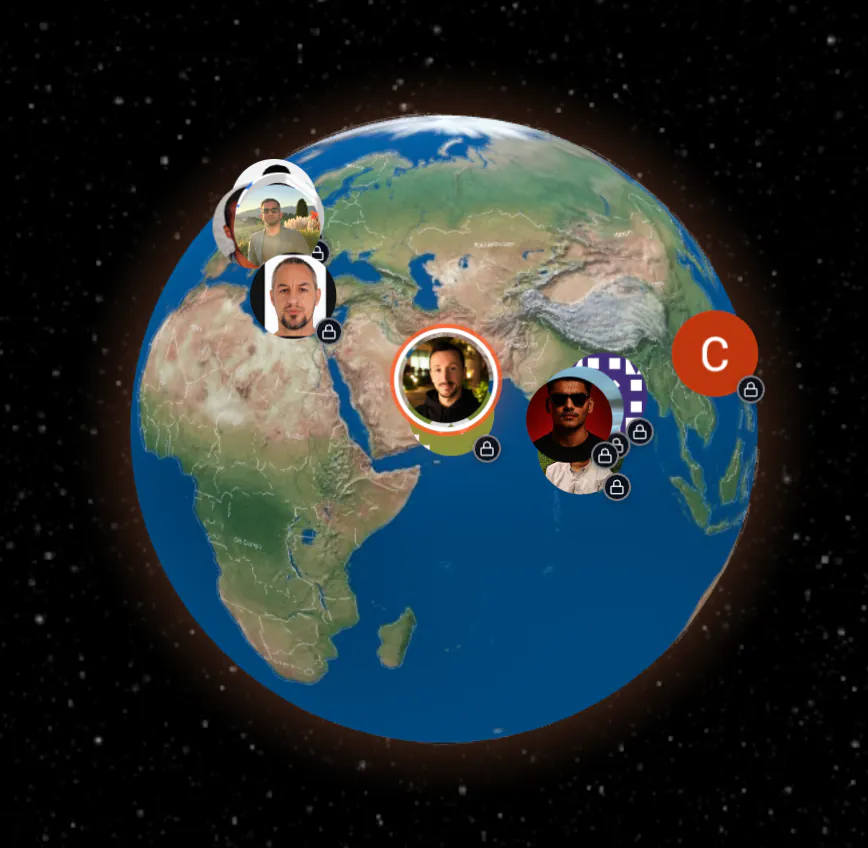 Dashi Metrics came in at rank 5 with 223 votes and 14 comments, and it took a visually different approach from the rest of the day. Rather than trying to be another dashboard, it turns revenue into a live 3D globe where every visitor and payment is mapped in real time. The positioning is clear: make business data feel alive, geographic, and interactive instead of static and dull.
That matters because analytics products often struggle with the same issue. They may be useful, but they are rarely memorable. Dashi tries to solve that by turning the interface itself into the value proposition. The idea of spinning, zooming, and interacting with revenue data as it happens gives founders and SaaS teams a more tangible way to see customer activity and global trends. It is not just about looking better; it is about making patterns easier to grasp at a glance.
Its relatively modest comment count compared with the vote total may suggest that the product hit a visual nerve more than a conversational one. That is not necessarily a weakness. Some launches stand out because people instantly understand what the product feels like. Dashi seems to have benefited from exactly that. It took a familiar business need and wrapped it in a format that is easier to notice, share, and remember.
6Vibe Buddy
 Vibe Buddy ranked 6th with 166 votes and 12 comments, and it is one of the more unusual launches on the page because it turns AI coding into a physical object. The product is a small desktop robot designed to show Codex and Claude Code usage limits and task status while you work. Instead of hiding all that information in another tab, it keeps the system’s state visible on your desk.
That is a smart form factor choice because it acknowledges that AI coding tools have created a new kind of attention problem. Developers now need to know whether the model is working, waiting for input, finished, or at its limit. Vibe Buddy translates that status into something ambient and always present. It is not promising more intelligence, just better awareness of what the intelligence is doing.
The launch likely stood out because it is both playful and functional without drifting into novelty for novelty’s sake. Founders and builders often enjoy products that make the invisible visible, especially when the underlying pain is real. The vote and comment numbers are smaller than the top five, but the concept is distinctive enough that people can immediately tell whether it fits their workflow. That kind of fast recognition is often what gives a hardware product momentum on Product Hunt.
7Screen Awesome
 Screen Awesome placed 7th with 140 votes and 7 comments, and its pitch is refreshingly direct. It is a free screen recorder that cannot upload your video. That one sentence does a lot of work. The product explains that it requests zero host permissions, so Chrome itself prevents it from reaching any server, which is an unusually strong privacy position for a recording tool.
The product goes beyond privacy alone, though. It also records tabs, screens, or camera video to MP4, auto-zooms to clicks with a virtual camera effect, and includes annotation features like arrows, blur, redaction, step counters, and text. The launch makes a point of saying everything is unlocked, with no account and no watermark. That combination of security, utility, and openness makes the product easy to understand for creators who need to record without worrying about where the content goes.
What likely helped Screen Awesome earn attention is the confidence of its constraint. Many tools claim trust, but this one makes a technical promise that is easy to verify. That sort of claim travels well on Product Hunt because it feels concrete, not promotional. In a category crowded with screen recorders, the inability to upload becomes the differentiator. It is not trying to be the biggest suite; it is trying to be the safest default.
8ZapDigits MCP
 ZapDigits MCP came in at rank 8 with 133 votes and 10 comments, and it tapped directly into the growing appetite for agent-ready business data. The product is an MCP server for marketing data, connecting Claude and ChatGPT to Google Analytics, Search Console, Meta Ads, and more than 30 marketing sources. The launch is short on flourish and heavy on utility, which seems appropriate for the audience it is chasing.
The positioning is strong because it sits at the intersection of two hot areas: marketing analytics and AI assistants that can actually do something with the data. Rather than forcing teams to export reports and then interpret them elsewhere, ZapDigits MCP tries to make marketing data accessible inside the tools people are already asking questions in. That turns a chatbot from a generic responder into a more practical analyst for day-to-day marketing work.
The comment count is modest, but that is not surprising for a deeply functional product with a technical audience. What probably helped it stand out is clarity. The launch does not overpromise a full marketing operating system. It simply gives Claude and ChatGPT a way to reach the systems marketers already rely on. In a day full of AI products, that concrete connection to existing workflows may have been what made it feel useful instead of abstract.
9VIDEO AI ME
 VIDEO AI ME ranked 9th with 127 votes and 6 comments, and it addresses a content workflow that has long been annoyingly fragmented. The product lets users make videos and then post them everywhere with one tool. More specifically, it generates UGC ads and product videos with AI, then publishes or schedules them to 15 platforms without leaving the app.
Its pitch is especially relevant for founders and marketers because it combines creation, distribution, and iteration. The launch says the AI writes platform-specific captions from the actual script, supports bulk scheduling for 25 videos at once, and helps users see which video wins on each platform so they can repost or generate a new version with one click. That is a smart packaging of the publishing problem, because it acknowledges that the hard part is not just making one video; it is running a content system across channels.
The smaller comment count suggests the conversation may have been more practical than speculative. People can quickly see whether they need this or not. The product likely stood out because it removes the handoff between editing and publishing, a gap that still wastes time for teams trying to ship a lot of content. On a day dominated by AI tools, VIDEO AI ME distinguished itself by focusing on the operational grind behind modern distribution.
10GrowthBook 5.0
 GrowthBook 5.0 closed the top 10 at rank 10 with 114 votes and 3 comments, and it brought a mature platform update into a launch day otherwise crowded with newer, narrower tools. The product combines feature flags, experimentation, and product analytics into one AI-native, warehouse-native platform. The emphasis is on helping teams build no-code experiments in the browser, let agents create flags and draft experiments, and use an in-app AI assistant to explore product data.
This is the kind of launch that signals depth rather than novelty. GrowthBook is not trying to invent a new category. It is refining a serious one, adding AI features and governance improvements while stressing faster queries and a streamlined workflow from idea to insight. The product is clearly aimed at teams that need both speed and control, which is often the harder promise to deliver in experimentation infrastructure.
The low comment count may reflect the nature of the audience. Infrastructure and analytics platforms can be incredibly important while attracting less public chatter than consumer-facing AI tools. Still, the vote total shows the market noticed. GrowthBook likely stood out because it connected AI to an established workflow in a measured way. Instead of replacing the whole stack, it is trying to make the existing stack easier to use and safer to operate.
What founders can learn from this launch day
The main lesson from 2026-08-04 is that AI products are getting harder to win with at the generic layer and easier to win when they own a specific job. The launches that drew the most attention were not vague “AI for everything” pitches. They were products with a sharp mental model: an assistant that handles founder logistics, a learning path that feels guided, a memory layer that follows users across tools, or a system that turns analytics into action. Founders browsing this day should notice how often the strongest launches reduced complexity to one memorable promise.
Another pattern is that the best-performing launches paired AI with a concrete workflow, not a broad aspiration. Hey Noah is about follow-ups and calendars. Driven is about moving from market insight to orders and monitoring. ZapDigits MCP is about making marketing data available inside the assistant people already use. VIDEO AI ME is about creating and publishing content without tool-switching. In every case, the product became easier to understand because the user journey was explicit. That kind of specificity is not just good marketing; it is often what makes the product feel believable.
There is also a quieter message in the day’s middle ranks. Products like Screen Awesome, Atlaso, and Vibe Buddy show that there is still room to stand out by solving an old problem in a more trustworthy or more tangible way. Trust, memory, visibility, and workflow continuity were recurring themes. If you are planning a launch, the question is not simply whether your product uses AI. It is whether you can name the exact frustration it removes and whether that removal is visible within seconds.
Finally, the comment-to-vote mix hints at something founders should pay attention to. Products that invite a strong reaction or a clear point of view can generate conversation even when the category is crowded. Others may earn quieter approval by solving an obvious pain with almost no ceremony. Both can work. What mattered on this day was clarity: the products that performed best knew precisely what they were, who they were for, and why that audience would care now.
