
Product Hunt on 2026-08-08 had a clear shape: founders kept building tools that remove friction from work that already exists, rather than inventing entirely new behaviors. The strongest launches were not trying to be everything at once. They each picked a narrow pain point, described it in plain language, and then showed how software could take over the annoying middle step that people usually tolerate until it becomes a habit.
That pattern shows up from the top-ranked GTM assistant all the way down to the last entries in the top 10. Some products aimed squarely at technical founders, others at operations teams, and a few at consumer use cases that want a smarter, more personalized interface. What ties them together is specificity. The products that did best today were the ones that could explain exactly what changes after you adopt them, and why that change matters before the enthusiasm wears off.
1The GTM Co-Founder
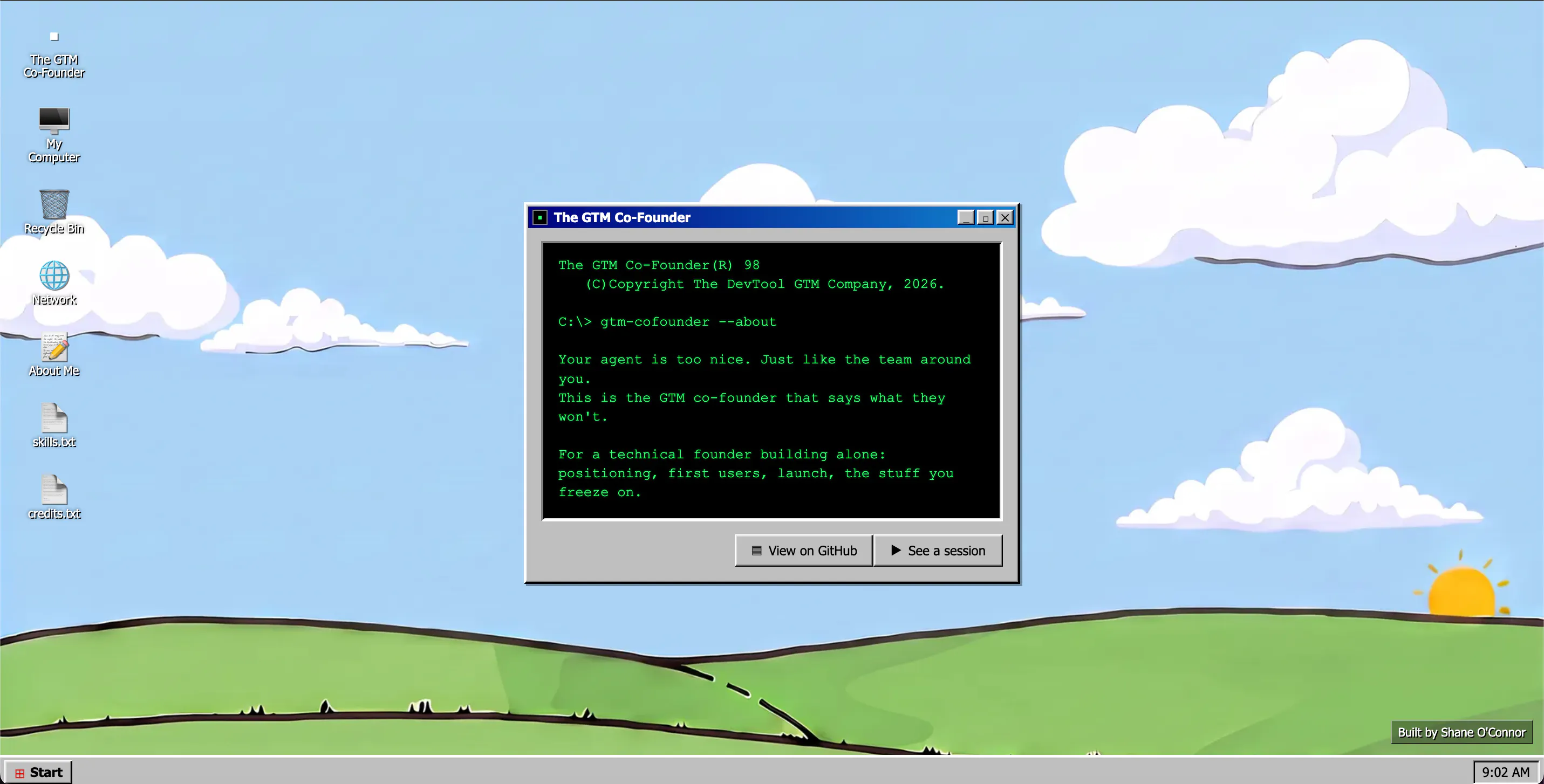 At rank 1 with 382 votes and 10 comments, The GTM Co-Founder had the kind of launch-day result that usually belongs to a product with a very sharp audience fit. It is aimed directly at technical founders who are tired of generic advice and want a more concrete path through the early go-to-market work. Instead of presenting itself as another AI assistant in the abstract, it positions as a set of open-source skills that interview the user, learn the product and market, and then guide them through a prioritized roadmap.
That positioning matters because it makes the product feel opinionated rather than decorative. The promise is not simply “use AI for GTM.” It is “use a system that understands your situation and then walks you through the exact sequence you need, from positioning to first 50 users to pricing.” The fact that it is free and open source likely helped it resonate with the Product Hunt audience, especially among founders who are wary of locked-down tooling and prefer something they can inspect, adapt, and trust.
The comment count suggests the launch also sparked interest beyond a simple upvote reaction. When a product at the top of the leaderboard gets engagement in both votes and discussion, it usually means the audience sees a real use case rather than a novelty. Here, the combination of practical GTM structure, open-source credibility, and the promise of reducing founder uncertainty seems to have been enough to make it the day’s most compelling launch.
2AstraPixels
 AstraPixels landed at rank 2 with 274 votes and 13 comments, which is a strong showing for a product that is not trying to solve a business workflow at all. Instead, it offers an animated pixel-art solar system with bodies placed at their real current positions, computed from published orbital elements. That detail is doing a lot of work. It tells users this is not just a pretty visualization, but a live, data-grounded representation of where things actually are.
The positioning is unusually charming and unusually precise at the same time. The product lets people zoom from the Sun to the Kuiper belt, browse 171 catalogued objects, and even see what the sky will be doing over the next six months. Then it adds a playful monetization layer: every rock is for sale, with a $5 claim that lets someone name an asteroid for display on AstraPixels itself. That is a clever way to turn passive curiosity into participation without pretending the name carries official astronomical weight.
The vote total suggests the concept has broad appeal, but the comments count hints that people likely lingered on the mix of science, art, and novelty. Launches that stand out on Product Hunt often do so because they are easy to understand in one sentence and still rich enough to explore afterward. AstraPixels seems to have benefited from exactly that combination. It is visually memorable, technically grounded, and just unusual enough to prompt a conversation.
3Hexis
 Hexis reached rank 3 with 182 votes and 8 comments, and its appeal looks firmly rooted in a growing enterprise problem: how to manage the skills, tools, and context that AI agents rely on. The product describes itself as a single place where a company’s AI knowledge lives, centrally managed and access-controlled, while still being usable from any agent. That is a compelling story for teams that have already started accumulating scattered prompts, instructions, and agent-specific setups.
The positioning is especially strong because it borrows a familiar model from software engineering. Hexis is a layer on top of Git, with versioning and pull requests, but wrapped in a cleaner interface so more people can use it. That framing makes the product easier to trust inside a company. It suggests governance without demanding a new mental model. The mention of MCP also helps anchor the product in current AI infrastructure conversations, which likely increased its relevance for technical buyers.
A launch like this usually wins when it speaks to a real coordination problem rather than just another productivity feature. The vote count is healthy, and the comment total suggests enough interest to generate discussion without turning into a debate. What probably helped Hexis stand out was clarity: it is not trying to be an all-purpose AI platform. It is a management layer for the messy middle between agents, context, and internal control.
4Basedash Subscriptions
 Basedash Subscriptions came in at rank 4 with 159 votes and 5 comments, and it is one of the cleanest examples on the board of a simple feature that removes an annoying manual ritual. The product lets people subscribe to any dashboard or chart and receive scheduled snapshots in email or Slack. It is not asking teams to rebuild their reporting process. It is taking the dashboard they already use and making it show up where attention already lives.
The positioning is practical to the point of being almost self-effacing, which is probably why it works. Cadence can be set to daily, weekly, or monthly, and each delivery includes current charts plus a path back to the live dashboard. That combination makes the product feel like a continuity layer between analysis and communication. It also solves a common founder headache: the Monday metrics email that everyone wants but nobody wants to assemble by hand.
With 159 votes, the launch clearly resonated, even if the comment count stayed modest. That is often the sign of a product that people immediately understand. There is no conceptual leap required. Teams already know they need recurring reporting, and Basedash is packaging the solution in a way that eliminates exporting, screenshotting, and forgetting to share. The result is a strong utility launch that likely appealed to operators far beyond the company’s existing user base.
5Toolport
 Toolport ranked 5 with 149 votes and 4 comments, and its pitch is very much for the people building and shipping AI systems every day. It is a free, open-source local MCP gateway that lets teams set up each server once and use it across a long list of agents, including Claude, Cursor, VS Code, Codex, and many more. The core idea is straightforward but important: rather than stuffing every tool definition into the prompt context, expose a few meta-tools that search and resolve what is needed on demand.
This is the sort of launch that earns attention because it reduces complexity in a way technical users can immediately evaluate. The product is speaking directly to token efficiency, approval workflows, security, and resistance to tool poisoning. It even claims up to 91% fewer tokens at the same task success, which is the kind of benchmark that gives a performance-minded audience something concrete to hold onto. The promise of secrets living in the OS keychain rather than client configs also gives the product a security posture that feels serious rather than opportunistic.
The launch likely benefited from being simultaneously practical and opinionated. People building with multiple agents are already looking for simpler infrastructure, and Toolport is offering a clear answer to tool sprawl. Its vote count is lower than the top few launches, but for a technical utility with a strong systems story, 149 votes and 4 comments suggest real interest from a specialized audience rather than broad but shallow curiosity.
6Pocket Fit
 Pocket Fit arrived at rank 6 with 22 votes and 1 comment, which is a much quieter response than the launches above it, but the product itself is built around an emotional problem that many fitness apps fail to solve. It wants to make progress visible. Rather than showing users another abstract number and hoping that motivation follows, it uses a photo to project what a body might look like one, two, three, and six months ahead, alongside a 3D avatar that changes over time.
The product positioning is clearly aimed at the frustration of early drop-off. It acknowledges that people often do everything right for a few weeks and still feel like nothing has changed. To address that, Pocket Fit layers in more than just visual feedback. Workouts auto-pick and progress weights, food is logged by photo, and the app tracks muscle coverage, mood, streaks, and even social accountability through a crew dynamic that roasts users for skipping leg day. It is built by two people in London, which adds a lean, focused feel to the launch.
The modest vote and comment totals do not necessarily mean the product lacked merit. They may simply reflect a more crowded and consumer-facing category where traction is harder to generate on a single launch day. Still, the idea is easy to grasp and emotionally resonant. What likely helped it stand out at all was the immediate visual payoff of future-state progress, which is more memorable than the usual fitness dashboard.
7Otiumz
 Otiumz placed 7th with 18 votes and 5 comments, and it sits in the more experimental corner of the day’s launches. The product is an AI-powered social app designed around the idea that a single polished identity is not the only way people want to show up online. It lets users create multiple profiles under one account, connect publicly or inside private circles, share moments, chat, and make calls. It also introduces Digital Selves and AI Characters that can help with conversation starters, reply suggestions, and optional auto-replies.
The positioning is ambitious because it addresses social identity fragmentation without pretending the problem is universally shared. That makes the product more niche, but also more expressive. It is not trying to be just another messaging app. It is trying to help people manage different social modes with more control and a bit of AI assistance. The combination of multiple profiles and AI-powered interaction gives the product a distinct angle, even if it asks users to adopt a new model of social presence.
The comment count is relatively high compared with the votes, which may suggest the idea prompted more curiosity than immediate consensus. That is often what happens with launches that are conceptually interesting but still feel early. Otiumz seems to have earned attention because it is trying something less conventional than the typical social app launch, and because the product narrative is easy to summarize in a sentence that sounds unlike everything else on the page.
8Patch — Your Security Center
 Patch came in at rank 8 with 12 votes and 3 comments, and it is another example of a product trying to consolidate a scattered set of chores into one calmer interface. It is a security app for Mac and iPhone, currently in App Store review, and it is meant for people who do not want to bounce between multiple tools to deal with online security. The product handles scam checks, leaked and duplicate passwords, credit freezes, and data broker removal, while also offering a security advisor to explain what to do next.
The positioning is especially useful because it reduces intimidation. Security products often lose people by making them feel ignorant or overwhelmed. Patch tries to do the opposite by collecting the tasks in one place and answering questions without requiring an account or server-side storage. That privacy posture is part of the value proposition, not a technical footnote. It tells users there is nothing stored that could be stolen, which is a meaningful trust signal in this category.
The launch numbers are modest, but that can be typical for a product still waiting on store approval and working in a trust-sensitive space. The comments likely reflect practical interest from users who understand the pain of fragmented personal security. What helped Patch stand out is that it does not try to be heroic; it tries to be reassuring. In a category full of anxiety, that can be a differentiator.
9Pesterly
 Pesterly ranked 9th with 12 votes and 1 comment, and it targets a problem that nearly every services business knows too well. It turns client document collection into an automated follow-up system inside Google Workspace. A checklist of files becomes an email request, reminders keep chasing whatever is missing on a fixed schedule, and every upload lands in a folder in the user’s own Google Drive.
This is the sort of product that is easy to underestimate because the pain point is mundane. But mundane pain points can be great launch material when they are recurring and expensive. The product’s value is in removing follow-up labor that nobody wants to own manually. By keeping storage in the customer’s own Drive, Pesterly also avoids introducing another new place to manage files, which makes the workflow feel less like software sprawl and more like a small automation layer over an existing system.
The vote total is low, but the product is extremely concrete. There is no ambiguity about what it does or who it helps. That kind of clarity matters, especially when the category is operational rather than aspirational. Pesterly likely stood out because it takes a common office annoyance and turns it into a repeatable process with almost no ceremony.
10Rendemo
 Rendemo closed the top 10 at rank 10 with 11 votes and 1 comment, but its pitch is one of the more interesting blends of sales, product, and AI on the day. It turns a screen recording of a real web app into a clickable demo by capturing the actual HTML rather than flat screenshots. That makes the result behave like the product itself, while still being usable as an embeddable demo, an MP4, or a guided tour on a live app.
The positioning is clever because it goes straight after a recurring go-to-market problem. Teams want polished demos, but building them often takes too much time or leads to something that feels fake. Rendemo says record once, then generate a reusable demo experience. The addition of an MCP server on every plan pushes the product deeper into the AI-tooling conversation by letting an IDE agent write captions, apply branding, direct the camera, lint the result, and publish it. That makes the workflow feel modern without losing the practical output.
Even with a smaller vote count, the product is easy to imagine using because it bridges a familiar content need with automation. It likely appealed to founders and marketers who know how much time can be lost preparing demos for sales calls or product pages. What made it memorable is that it does not just capture a product; it preserves interactivity, which is the part most demo tools sacrifice.
What founders can learn from this launch day
The clearest lesson from 2026-08-08 is that precision beats breadth. The launches that rose highest did not describe themselves as general-purpose platforms. The GTM Co-Founder solves one very specific founder job. Basedash Subscriptions does one reporting task cleanly. Toolport focuses on one infrastructure pain. Even AstraPixels, the most whimsical entry near the top, is grounded in a very specific visual and scientific premise. Product Hunt audiences seem to reward products that know exactly what they are and who they are for.
Another takeaway is that strong launches often combine utility with a strong mental model. Hexis uses Git as a familiar governance frame. Pesterly uses a checklist-to-email workflow. Rendemo turns screen recordings into interactive demos. These are not abstract AI stories. They are familiar tasks reimagined with just enough technical leverage to feel materially better. That is a much easier story for founders to tell, and for users to believe.
There is also a noticeable split between products that sell relief and products that sell delight. The top-ranked launch and the operational tools are all about reducing friction, removing repetitive work, and making existing systems easier to use. Meanwhile AstraPixels and Otiumz show that launches can still get attention when they offer novelty, identity, or a bit of playfulness. The common thread is not category. It is specificity and conviction.
For founders planning their own launches, the day offers a practical reminder: the more clearly you can describe the before and after, the easier it is for people to understand why your product matters. That clarity shows up in the votes, but more importantly, it shows up in whether people can tell the story onward. The launches that did best here were the ones that made that job easy.
