

Product Hunt’s top of the board on 2026-08-17 had a very specific mood: software that tries to remove the invisible labor around the actual work. The most successful launches were not just promising more AI, but wrapping that AI in systems for remembering, executing, testing, scheduling, and explaining itself. That made the day feel less like a parade of generic copilots and more like a collection of products aimed at operational pain.
What also stands out is how many of these teams chose a narrow promise and then built a broader platform around it. Some products leaned into open source and local-first control, others into cloud execution or team workflows, and several framed themselves as the answer to a problem founders already know too well: the gap between a smart demo and something reliable enough to run in real work. The vote totals and comment counts suggest Product Hunt responded most strongly to products that sounded immediately useful, technically credible, and specific about the job they solve.
1Meridian
 Meridian took the #1 spot with 419 votes and 77 comments, which is a strong signal that the problem it targets lands squarely in founder territory. At its core, it is an open-source AI work journal that runs entirely on your device, quietly turning daily activity into plain-English summaries as the day unfolds. The pitch is not just that it remembers what you did, but that it does the remembering locally, with no cloud and no account.
That positioning matters. Meridian is framed less like another productivity app and more like an insurance policy against forgotten work. The product also goes one step further by drafting updates for tools like Jira, which gives it a practical edge beyond journaling. The combination of privacy, usefulness, and a clear downstream workflow likely helped it stand out from a crowded field of AI note-takers and status tools.
The vote and comment profile suggests people saw a real operational use case, not a novelty. “Do the work. Let the remembering take care of itself” is a simple idea, but it connects to something many teams feel every week: the burden of proving progress. Meridian’s open-source and MIT-licensed framing probably also helped it appeal to builders who want control, not another subscription with a black box behind it.
2Omni by xpander
 Omni by xpander finished second with 377 votes and 29 comments, and it made its case by focusing on a gap that many AI teams already know: agents often live on a laptop when they really need to live in the cloud. The product positions itself as an AI engineer that takes workflows from local experiments to scheduled, long-running, shareable cloud agents. It is aimed at the frustrating middle ground between “works on my machine” and something a team can trust.
The strongest part of the positioning is that Omni does not stop at deployment. It also promises to wire tools and skills, test on mock data, improve prompts, compare models, and debug failed runs. That broad maintenance story is important because it speaks to the ongoing cost of agent systems, not just the initial build. In other words, it’s not simply helping you launch an agent; it is trying to keep it healthy.
The 377-vote result suggests there is real hunger for infrastructure that makes agents more durable and collaborative. The comment count is lower than Meridian’s, which may indicate that the value proposition was understood quickly and did not require much debate. For founders, that is often a sign of tight product-market language: “Stop babysitting your AI agents” is blunt, specific, and easy to grasp in one glance.
3Clears
 Clears took third with 363 votes and 35 comments, and the headline tells you exactly where it wants to sit in the stack: beyond AI coding, toward agentic software delivery. Rather than positioning itself as yet another assistant for individual developers, it is presented as an execution platform for autonomous software delivery across the software development lifecycle. That makes the scope feel much larger, and also more enterprise-oriented.
The product description suggests it is speaking to R&D organizations that want to move from isolated AI tools to coordinated execution. That is a useful framing because many teams have already adopted AI in pockets, but still lack a broader operating model for how those tools fit together. Clears seems to address that strategic layer, where value comes not from one-off coding help but from end-to-end delivery.
Its performance on Product Hunt hints that the market is still interested in bigger, more structural AI stories, especially when they promise to touch the entire SDLC. The 35 comments may reflect curiosity around how far that can really go. Even so, a top-three finish says the category itself is resonant, and the product earned attention by speaking to transformation rather than incremental speedups.
4Vendo
 Vendo came in fourth with 338 votes and 60 comments, and its premise is refreshingly concrete: let users build their own features inside your product. It describes itself as an open-source customization layer that allows customers to add features and micro-apps just by describing what they want, while the company keeps the guardrails in place through its own API. That creates a middle path between rigid software and fully bespoke development.
The positioning is smart because it speaks directly to a familiar founder problem. Every product team eventually hits the point where customers ask for variation, but the core product cannot branch endlessly without becoming a maintenance burden. Vendo turns that tension into a feature by making software dynamic and customer-shaped. The phrase “inside the guardrails you set” matters here, because it reassures teams that flexibility does not have to mean chaos.
The vote and comment totals suggest the idea sparked enough interest to invite discussion, which makes sense given how broad the implications are. If it works as advertised, Vendo could change how teams think about roadmap pressure, onboarding, and customization. Even in a crowded AI-launch day, this stood out because it was less about automation for the builder and more about giving the user controlled agency inside the product.
5Scholé Scenarios
 Scholé Scenarios landed at rank five with 171 votes and 18 comments, and it brought a different kind of AI promise to the day. Instead of chasing developers or operations teams, it targets learning itself. The product argues that most education explains concepts without giving people enough chance to practice the situations they will actually face, and it responds with scenario-based, adaptive learning that inserts realistic moments into the lesson flow.
That framing gives the product a very human edge. Rather than abstract exercises, Scholé Scenarios talks about explaining what you learned to a teammate, saving the sale, or discussing a topic confidently with a client. Those examples make the product’s intent easy to picture and help it feel grounded in actual work outcomes. The idea of an agentic learning system that adapts what comes next also suggests a more personalized path than traditional courseware.
Its performance shows there is still room on Product Hunt for learning products that do more than package content neatly. The lower comment count suggests the concept was understood without much friction, though maybe not as hotly debated as the day’s higher-ranked infrastructure launches. Still, the positioning is thoughtful: it sells practice, not passive consumption, which is often the harder and more valuable promise.
6OpenTrade
 OpenTrade ranked sixth with 154 votes and 20 comments, and it sits at the intersection of agents, automation, and a highly sensitive use case. The product is an open-source trading harness for Claude Code and Codex agents, built to provide tools and guardrails so agents can trade through Robinhood’s official MCP. It runs on your machine and includes practical plumbing like cron schedules, custom notifications, and persistent background sessions.
The positioning is notable because it combines a high-stakes activity with a strongly controlled technical wrapper. That matters in a category where trust is everything. OpenTrade is not pitching free-form AI decision-making; it is offering infrastructure that constrains and operationalizes the workflow. For the audience on Product Hunt, that distinction likely makes the project feel more serious than speculative.
The 154 votes and 20 comments suggest curiosity and caution in equal measure. Launches that touch financial activity often generate that mix, especially when they are open source and agent-driven. OpenTrade probably stood out because it made the use case explicit, the tooling concrete, and the boundaries visible, which is exactly what you want when the product is asking people to imagine an agent doing real work.
7Treg
 Treg came in seventh with 151 votes and 9 comments, and it is one of the clearest utility plays on the list. It describes itself as “OpenRouter for tools,” giving agents access to more than 2,600 APIs behind one URL and one token, with pricing and request/response details visible upfront. The promise is simple: agents should be able to call the best tool for the job without wrestling with a pile of vendor-specific integrations.
This launch is interesting because it reframes tools as a routing problem. Instead of selling a single capability, Treg sells access, discovery, and unified usage. The 0% markup message adds a strong economic argument, while the open-source angle signals openness and developer friendliness. Those elements together make the product feel like infrastructure rather than a marketplace gimmick.
Its modest comment count compared with the vote total suggests the pitch may have been easy to appreciate at a glance. Builders know the pain of integrating multiple external services, so a central control layer is immediately legible. Treg stood out by making the agent-tooling story feel like a procurement and orchestration layer, not just another API directory.
8Replay QA for Teams
 Replay QA for Teams landed eighth with 149 votes and 8 comments, and it addresses a problem that every fast-moving team recognizes: shipping faster than you can verify. The product tests web apps like a real user, looking for broken flows, UI issues, and bugs before customers see them. It also adds context behind each issue and suggests fixes, which turns detection into something closer to triage support.
The team-focused update is important here. Shared projects, teammate mentions, localhost testing, and QA checks on every pull request all point to a workflow designed for collaboration, not isolated QA ownership. That shift matters because many products in this space only help find bugs; fewer make the process of coordinating fixes smoother across a team.
The 149-vote result indicates a familiar pain point still draws interest, even if the category is crowded. The low comment count may suggest the concept is straightforward, or that users already have a mental model for what good QA automation should do. What likely helped Replay QA for Teams stand out is the combination of realism and team workflow, which makes it feel practical rather than abstractly “AI-powered.”
9Startup Program by Recall.ai
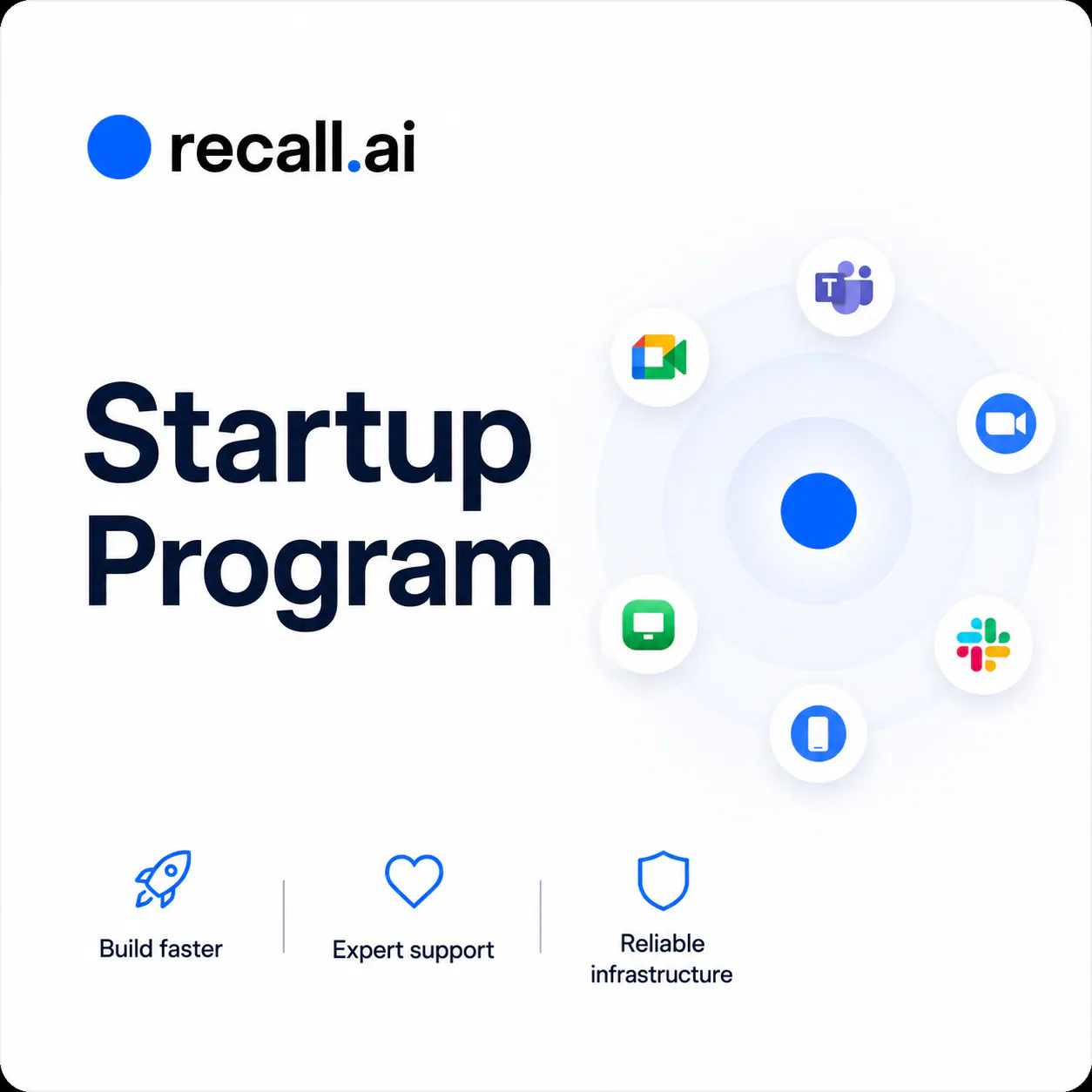 Startup Program by Recall.ai ranked ninth with 134 votes and 7 comments, and it is a reminder that not every successful launch needs to be a new product surface. Here, the pitch is a startup program for meeting recording infrastructure, with a very specific offer for early-stage teams: discounted pricing, engineer support, fast bot joins, product access, MCP access, and calendar integration. It is straightforward, but that is part of the appeal.
The positioning is essentially about removing friction from a complex foundational layer. Meeting infrastructure is one of those unglamorous services that becomes critical once a product depends on it, so the startup program is trying to make adoption easier before teams get too deep into scaling concerns. By emphasizing support and reliable bot joins, the launch speaks to operational confidence as much as cost.
The 134 votes and 7 comments suggest the audience understood it quickly and likely appreciated the usefulness if they are building in adjacent categories. This is a practical, founder-friendly launch because it reduces the cost of experimentation while signaling that the underlying infrastructure is ready for production use. It may not have been the flashiest item of the day, but it fits the broader theme of removing internal friction.
10Skriptr
 Skriptr closed out the top 10 with 120 votes and 15 comments, and it brings the AI workspace conversation to students rather than teams. The product is built for research, writing, and learning, and it emphasizes source-grounded answers by showing the exact page behind every response. It also asks questions back, which gives the product a more conversational and reflective feel than a simple summarizer.
That last detail is important because it sharpens the positioning. Skriptr is not trying to replace thinking; it is trying to support it. The phrase “The thinking stays yours” is a clear statement of product philosophy, and it likely resonated with users who are cautious about handing too much of the learning process to an opaque assistant.
Its comment count is relatively healthy for a lower-ranked launch, which may indicate that the source transparency angle sparked interest. In a day full of agent platforms and workflow infrastructure, Skriptr stood apart by focusing on trust and pedagogy. It is a reminder that careful AI products can compete when they make the user feel more informed rather than more automated.
What founders can learn from this launch day
The strongest pattern across this launch day is that Product Hunt rewarded products that solve for the messy parts around AI, not just the model itself. Meridian remembers, Omni deploys and maintains, Clears operationalizes delivery, Replay QA verifies, and Skriptr grounds answers in sources. Even the more infrastructure-heavy launches, like Treg and OpenTrade, are really about reducing uncertainty in how agents and tools behave once they are in use.
Another lesson is that specificity still wins. These products do not simply say “AI for productivity” or “AI for teams.” They choose a job, a workflow, and often a constraint. Open source, local-first, guardrails, 0% markup, source citations, and shared team workflows all helped turn broad AI language into something credible. That kind of precision seems to have mattered more than generic claims of intelligence.
It is also notable that several launches framed themselves around control and trust. Local device execution, guardrails, exact source pages, and visible pricing all point to the same buyer concern: AI should be useful without becoming opaque. For founders, that suggests a durable advantage may come not from making a product feel more magical, but from making it feel safer, easier to inspect, and easier to fit into an existing process.
In short, this was a day for builders who understand that adoption depends on reliability as much as novelty. The launches that rose to the top were the ones that made a clear promise, showed where the system fits in the workflow, and reduced one meaningful source of friction. That is a useful signal for anyone planning a launch of their own.
