
Product Hunt on 2026-09-23 was not a day for polished demos with narrow features. The launches that rose to the top were mostly about execution: agents that can act, systems that remember, and tools that make AI accountable instead of merely conversational. That pattern matters because it suggests buyers are less interested in what AI can say and more interested in what it can reliably finish.
There was also a noticeable split in the kinds of products that resonated. Some launches leaned into autonomous work at the infrastructure layer, while others focused on very human workflows like creative review, inbox replies, or film photography. The common thread was not just that they were AI-adjacent. It was that they each tried to remove a specific point of friction founders and teams feel every day.
1Solid
 Solid took the #1 spot with 449 votes and 44 comments, and the positioning explains why it cut through: this is not another assistant that waits for instructions in a chat box. Solid describes AI agents that have their own computers, accounts, and budgets, which pushes the idea of automation into genuinely operational territory. Instead of helping with a task in the abstract, the product is framed as something that can pick up the machinery around the task and keep going.
What stands out is the way Solid tries to make autonomy feel practical rather than theatrical. The product claims agents can use apps through APIs or log in like a person, build what is missing, and fix problems as they go. That is a much stronger promise than “help me write” or “help me brainstorm,” and it helps explain why the launch drew so much attention. A top rank with that volume of votes suggests the audience was ready for a tool that sounds like it was designed for long-running, team-level work rather than a personal sidekick.
2Naise AI
 Naise AI landed at #2 with 401 votes and the highest comment count near the top of the board at 88, which hints that the product sparked not just interest but discussion. Its pitch is blunt: autonomous marketing agents that actually execute. For founders who have spent too much time feeding prompts into tools that only return drafts, that framing is immediately legible. Naise is clearly positioning itself as the anti-empty-text-box product.
The product’s promise is especially tuned to lean teams. It talks about Persistent Memory for brand guidelines, Prompt Playbooks for repeatable workflows, and execution that spans influencer vetting, journalist outreach, and native social scheduling. That breadth matters because it makes the product feel closer to a part-time marketing department than a single-purpose writer. The launch’s strong vote total suggests people responded to the operational angle, while the high comment count may reflect curiosity about whether autonomous marketing can really be trusted across so many channels. Either way, Naise made its case by showing up as a system, not a generator.
3Claude Opus 5.5
 Claude Opus 5.5 came in at #3 with 329 votes but only 6 comments, which is a useful reminder that model launches often travel differently from product launches. Anthropic framed this as its first model in the new Claude 5.5 family, with a focus on agentic coding and knowledge work. The pitch is straightforward: better performance, clearer communication, stronger safety, and 40% lower cost than Opus 5 on typical workloads.
That combination of improvements is likely what made the launch matter more than the comment count might suggest. Founders and teams buying models care about utility, cost, and reliability in a way that is often easier to vote for than to debate publicly. The lower cost headline is especially important because it changes the practical calculus for shipping more agentic workflows. Claude Opus 5.5 was not trying to win on novelty alone. It was trying to feel like the version people can actually build on.
4Pactto
 Pactto reached #4 with 187 votes and 44 comments, a combination that suggests a niche audience saw real value and had something to say about it. The product is aimed squarely at creative teams, and its positioning is about solving a familiar problem: reviews that happen in calls where context evaporates once everyone leaves. Pactto tries to turn the review room into a memory system, with AI agents that understand creative intent, capture every note, and make live changes.
That framing makes the product feel less like meeting software and more like a production workspace. The phrase “studio quality” is doing a lot of work here, and it signals that the product cares about how creative teams actually present and refine assets. The vote total shows enough pull to move beyond a design-only crowd, while the comment count suggests the problem space resonated. If teams are tired of repeating decisions across Zoom or Google Meet, a room that remembers everything is an easy pitch to understand.
5AgentScore
 AgentScore ranked #5 with 155 votes and 6 comments, and its proposition is refreshingly measurable. Rather than promising to build the agent for you, it offers a daily score for production agents across outcome, reliability, cost, speed, and safety. The product connects to Latitude and then keeps updating, which means the emphasis is on monitoring behavior over time instead of celebrating a one-time demo.
This is the kind of launch that tends to appeal to builders who have already shipped agents and discovered that maintenance is the real problem. The language is practical, almost severe, because it treats improvement as something that should be visible every day. A modest comment count alongside solid votes suggests the market understands why this matters without needing much persuasion. In a week full of autonomous systems, AgentScore reminded everyone that autonomy without measurement is just hope.
6ToneBird
 ToneBird placed #6 with 155 votes and 26 comments, tying AgentScore on votes but drawing more conversation. Its promise is more personal than many of the launches around it: an AI reply assistant for Mac and Windows that remembers relationships, uses conversation history and connected files, and drafts replies in your voice inside Gmail, Slack, and other supported apps. The important detail is not just that it writes for you, but that it tries to understand context across people and threads.
That makes ToneBird part productivity tool, part memory layer. The product is aimed at people who spend a lot of time replying carefully and want help that does not flatten tone into generic corporate prose. The comment activity suggests that this kind of assistant still invites scrutiny, likely because trust and voice are harder problems than drafting speed. Still, the launch’s position near the top shows there is real demand for AI that acts more like a relationship-aware editor than a detached writing engine.
7Alexandria by Firecrawl

That kind of positioning works because it is both grand and technical. The “superintelligence” label catches attention, but the actual value proposition is about reducing friction in retrieval and improving answer quality. The launch also fits neatly into Firecrawl’s existing developer identity through MCP, CLI, and API access. With only a handful of comments, the launch appears to have appealed most strongly to technical buyers who understand the difference between generic browsing and a real knowledge layer.
8Lightmeter
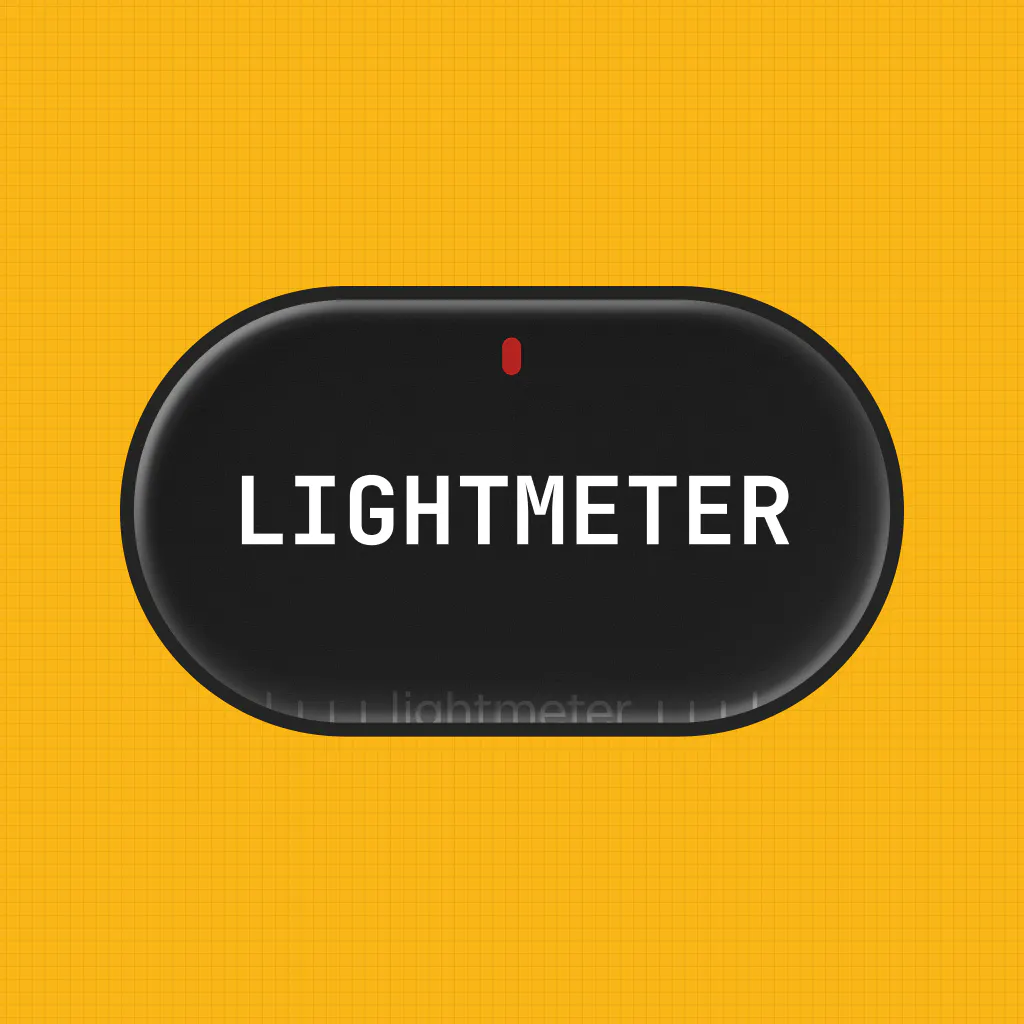 Lightmeter ranked #8 with 123 votes and 8 comments, and it was one of the few launches that stepped outside the agent-heavy theme of the day. The product is described as a film camera designed for everyday moments, but with a twist: it functions as a light meter when you carry film and as a film camera when you do not. The pitch leans on true RAW capture and a film look built from grain, halation, and color behavior rather than a filter.
What likely helped Lightmeter stand out is its rejection of the usual AI-assisted consumer framing. It explicitly says there is no AI, no account, and nothing leaves your phone. That kind of privacy-forward, tactile positioning is notable on a day dominated by automation. The vote count is respectable, and the comment count is enough to show people noticed the contrast. In a feed full of software that wants to take over work, Lightmeter offered a more grounded kind of utility.
9Dub Program Marketplace
 Dub Program Marketplace reached #9 with 120 votes and 7 comments, and it is very much a founder-facing utility rather than a consumer-friendly product story. The launch lets people browse and apply to SaaS affiliate programs, with examples including Wispr Flow, Framer, Granola, Superhuman, and CodeRabbit. The positioning is simple and commercial: if you have an audience, this is a path to monetization.
What gives the product its edge is the specificity of the companies listed. It is not just an abstract affiliate directory, but a marketplace tied to recognizable SaaS brands that already have credibility with operators and creators. That makes the product feel immediate and useful rather than broad and generic. The vote total suggests there is interest in clearer distribution and monetization infrastructure, especially when the programs are already familiar to the audience.
10RankControl
 RankControl closed the top 10 at #10 with 119 votes and 25 comments, and it sits at the intersection of SEO and AI visibility. Its pitch is that most AI SEO tools stop at showing where you are mentioned, while RankControl tries to run the full lifecycle. It helps create content that AI and Google recommend, publishes native posts on your own domain, tracks visibility across ChatGPT, Perplexity, Claude, Gemini, Grok, and more, and adds competitor gap analysis, backlinks, social drafts, analytics, and AI crawl reports.
That is a broad promise, but the launch was smart to frame it around a current anxiety: how to get cited by AI systems without losing sight of classic search. The 25 comments suggest the topic was discussion-worthy, probably because it touches a live problem for marketers and founders who are trying to adapt to changing discovery surfaces. RankControl’s placement shows that products promising visibility across both traditional search and AI answers can still get attention when they present the workflow as end-to-end rather than fragmented.
What founders can learn from this launch day
The biggest lesson from this launch day is that “AI” alone is no longer a differentiator. The products that performed best were the ones that translated AI into an operational outcome: owning a job, running a marketing workflow, scoring agent performance, remembering relationships, or improving answer quality. The launches that were easiest to understand were the ones that made the handoff from promise to execution feel concrete.
There is also a clear signal that memory and accountability matter. Several of the top products were not just intelligent in the abstract; they were persistent, measurable, or context-aware. Solid brings its own machines and budgets. Naise AI keeps brand memory. Pactto remembers decisions. AgentScore checks whether systems are improving. That suggests founders should think less about adding intelligence as a feature and more about making systems trustworthy over time.
Finally, the day showed that narrower products can still compete when the pain is sharp enough. Lightmeter, Dub Program Marketplace, and RankControl are all very different from the agent platforms above them, but each offers a clear reason to exist. The common thread is specificity. If you can explain exactly what job your product owns, and why existing tools leave that job unfinished, you have a much better chance of standing out even on a crowded Product Hunt day.
