
Product Hunt’s top launches on September 2, 2026 tell a fairly clear story: founders were rewarded for products that collapse annoying workflows into something that feels almost invisible. Across the top of the board, the strongest launches did not just promise more power; they promised less setup, fewer subscriptions, fewer handoffs, and fewer reasons to switch tabs. That pattern showed up whether the product was aimed at agents, DevRel teams, sales teams, or everyday creators.
The day also leaned hard into practical AI. Several launches positioned themselves as infrastructure for agentic work, but the best-performing ones were not abstract platforms. They were sharply framed utilities with one obvious job to do. The vote totals and comment counts suggest that Product Hunt’s audience responded to specificity, especially when the pitch made the time savings easy to picture. Even the non-AI launches borrowed that logic, emphasizing native workflows, free tiers, and polish over broad category claims.
1Monid
 Monid took the top spot with 444 votes and 59 comments, and the response makes sense given how plainly it framed the problem. The product describes itself as “OpenRouter for agent tools,” but the simpler takeaway is that it gives AI agents access to more than 1,800 APIs without forcing teams into a pile of separate subscriptions. That includes everything from SEO and lead gen to video and music generation, social media, stocks, market trends, on-chain data, competitor tracking, and sentiment analysis.
That positioning is doing a lot of work. Instead of selling an all-purpose AI layer, Monid is selling a key that unlocks many existing tools. For founders building agents, that is immediately legible because it speaks to the real bottleneck: not model output, but tool access and orchestration. The rank and engagement suggest people saw it as more than a nice integration layer; they saw it as a practical shortcut to making agents useful in the real world.
What likely helped it stand out was the breadth of the promise paired with a simple mental model. A single key, no subscriptions, broad API coverage, and a use-case list that feels close to revenue-producing work all give the product instant utility in a launch feed that is crowded with abstractions. The comments total also hints that the launch invited discussion rather than just passive approval, which is often a sign that a product has touched a nerve.
2Browzer
 Browzer landed at number 2 with 422 votes and 50 comments by going straight at a common pain point inside technical teams: keeping docs, guides, changelogs, and launch content current. Its pitch is straightforward and appealing to anyone who has watched DevRel turn into a backlog of writing tasks. You connect a GitHub repo, and Browzer drafts the technical content automatically, then “heals” it on every merge so the material stays aligned with the code.
That last part is probably what made the launch especially resonant. A lot of tooling can generate first drafts, but fewer products make a credible case for ongoing maintenance. Browzer is positioned as automation for the whole technical-output pipeline, not just content creation. The promise to handle docs, quickstarts, cookbooks, and SEO and AEO friendly blog posts gives it reach, while the “heal on merge” angle implies less drift between what ships and what gets documented.
Its vote count suggests there is real appetite for something that helps DevRel teams shift from production work to community and growth. It is also a good example of a Product Hunt launch that sells a workflow outcome rather than a content feature. The more specific the operational pain, the easier it is for founders and technical marketers to imagine the product fitting into their stack.
3Articos
 Articos took third place with 356 votes and 52 comments by speaking directly to a problem many SaaS teams and agencies know too well: launching with messaging they only half believe in. Its promise is to test messaging, positioning, and landing pages against simulated personas matched to an ICP, with the goal of giving teams “real audience signal” in under 30 minutes. That is a strong pitch because it replaces intuition with something that feels structured and fast.
The product also tried to bolster credibility by noting peer-reviewed accuracy at 86% relative to Baymard and Nielsen Norman. Whether or not every visitor digests that detail, it clearly signals that the team wanted to frame Articos as more than an AI toy. The launch is aimed at founders and marketers who need faster validation before spending more time and money on a message that may not land.
With voting and comments both healthy, Articos appears to have hit the sweet spot between novelty and practical use. It is not selling a grand vision; it is selling a better launch decision. That focus likely helped it climb, because Product Hunt audiences often respond to tools that reduce uncertainty, especially when they can be used early in the go-to-market process.
4CleanShot 5.0 with Studio Mode
 CleanShot 5.0 with Studio Mode came in fourth with 249 votes and 19 comments, which is a solid showing for a mature Mac utility in a crowded category. The launch reinforces what CleanShot has long stood for: polished screenshots, screen recordings, and collaboration tools built natively for Mac. Studio Mode is the headline addition, and the pitch is that it turns a simple screen recording into something that looks professionally produced.
The “no subscription required” line matters here. For tools that people use often but not always daily, pricing can be as important as features. CleanShot is leaning into the trust it has already built and extending the product without making the experience feel bloated. The update feels like a product-led expansion rather than a reinvention, which is often the right move for software with a loyal base.
The vote and comment totals suggest a launch that appealed less through shock value and more through credibility. People know this category, they know the pain of clunky recording tools, and they can immediately understand what Studio Mode improves. Sometimes that is enough to perform well: a trusted product, a meaningful new layer, and a clear statement that the tool stays native and simple.
5Dial
 Dial placed fifth with 217 votes and 39 comments by attacking a very specific gap in the agent stack. The pitch is almost funny in its bluntness: AI agents can deploy in seconds, but they still cannot easily get a phone number. Dial fixes that by giving agents a real number in about 10 seconds, with voice calls, SMS in 200+ countries, iMessage messaging, and even the ability to read inbound verification codes. It also exposes access through REST, CLI, MCP servers, and SDKs.
This is the kind of launch that feels obvious once someone says it out loud. The moment you imagine an agent needing to sign up somewhere, receive a verification code, or call a person, the value becomes immediate. Dial is not trying to be a full communications platform; it is positioning itself as the missing phone layer for agents. That restraint likely helped the product land clearly with the Product Hunt audience.
The numbers show strong interest, and the comments count suggests people saw a real use case rather than a speculative one. The no-card free credit offer also lowers the barrier to experimentation, which matters on a launch day where many products are asking visitors to imagine future behavior rather than try something tangible right away.
6Parasocial
 Parasocial ranked sixth with 203 votes and 17 comments, and it stood out by focusing on a more personal, consumer-facing workflow. It is a native podcast player built for people who care deeply about podcasts, with fast episode delivery, auto-downloads, smart playlist rules, instant search, bookmarking, tagging, and sharing. The product is native across iPhone, iPad, Mac, and CarPlay, with sync that does not require an account.
What gives this launch character is the tension between utility and personality. The name is playful, but the feature set is serious and clearly aimed at heavy listeners who want control over a large library. It is not trying to be a social network or an audio platform; it is trying to be the best environment for someone who already listens a lot and wants a cleaner system around that habit.
The engagement numbers are respectable, especially for an app in a mature category. That suggests the launch resonated with people who value craft, native software, and opinionated design. In a day full of AI infrastructure and workflow automation, Parasocial offered a quieter pitch: make a familiar thing faster, smarter, and more pleasant to live with.
7OpenClaw 2.0
 OpenClaw 2.0 reached seventh place with 199 votes and 4 comments, which is a slightly unusual mix: a meaningful vote total but very little discussion. The product presents itself as “the AI that really does things,” and the update focuses on making setup easier by detecting ChatGPT or Claude keys automatically and letting users configure the tool through chats with the agent itself. It also adds multiplayer team features, refreshed browser tools, memory upgrades, and local helpers for browser control and file management.
The launch is clearly aimed at people who want agents to do operational work, not just answer questions. By emphasizing local execution and browser/file control, OpenClaw is staking out the part of the market that wants practical autonomy with fewer manual steps. The key-detection and conversational setup details are small, but they matter because they address the moment where many users drop off: installation and configuration.
The low comment count may indicate a product that people were willing to vote for but not yet ready to debate at length. That often happens with agent tooling that feels useful but still technically dense. Even so, the rank shows there is still plenty of enthusiasm for products that make agent setup less brittle and more collaborative.
8RoundOS
 RoundOS came in eighth with 140 votes and 21 comments by aiming at one of startup’s oldest recurring expenses: the data room. The pitch is deliberately blunt. It says it is a free, forever alternative to DocSend, Papermark, and other virtual data room tools, and it offers deck sharing, diligence rooms, watermarking, NDAs, and analytics behind every open. That combination immediately tells founders exactly when it fits into their workflow.
The launch language is also notable for its confidence around pricing. “Free, forever” is not subtle, but in a category where basic infrastructure can feel oddly expensive, the message is easy to understand and remember. RoundOS is not trying to differentiate through a flashy interface or a narrow niche. It is trying to replace a line item that founders may already resent.
Its vote and comment totals suggest the product landed with a practical audience rather than a mass one. That is consistent with the category. Many startup tools do well on Product Hunt when they save a visible expense and remove friction from a standard fundraising process. RoundOS appears to have done exactly that.
9Dyson CameraJet
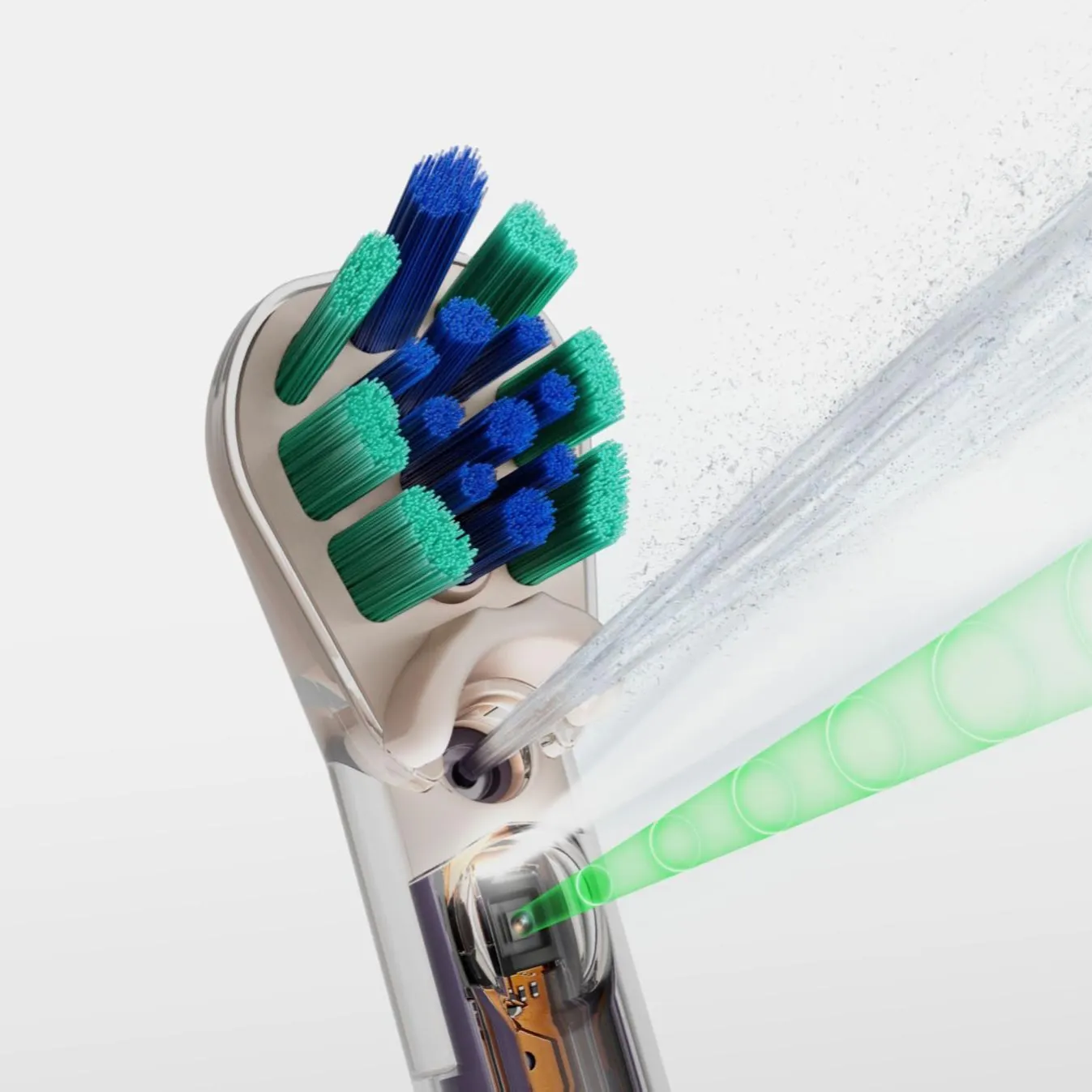 Dyson CameraJet earned ninth place with 139 votes and 8 comments, and it was easily the most unusual launch in the top 10. The product claims to combine sonic brushing with automated water flossing, using an onboard macro camera to detect interdental gaps at 28 fps and fire targeted conical bursts of mouthwash while you brush. In plain English, it is trying to collapse two oral-care steps into one motion.
The concept is pure Dyson in the sense that it takes a routine consumer task and reimagines the hardware around it. Whether people are intrigued or skeptical, it is the kind of product that gets attention because the mechanism sounds distinctive. The launch is less about software logic and more about applied engineering, but it still fits the day’s broader theme of removing extra steps from daily routines.
The lower comment count compared with the vote total may reflect curiosity more than deep debate. People likely understood the novelty quickly. In a launch day full of software that saves time at work, Dyson CameraJet offered the consumer version of the same promise: fewer separate tools, more integration, less hassle.
10Claude Fable 5.1
 Claude Fable 5.1 closed the top 10 with 135 votes and 11 comments, and its positioning was intentionally broad. It was described as Claude’s most advanced models for coding and knowledge work, with research capabilities that hint at future scientific contribution. The launch leans on the strength of the Claude brand more than on a narrow product mechanic, which is appropriate for a model release.
The presence of Mike Krieger among the makers added weight, but the launch itself did not rely on theatrics. Instead, it emphasized performance in coding and knowledge work, two categories that are already central to how people evaluate frontier models. The research angle also adds a more ambitious narrative, suggesting the models are not just useful today but moving toward deeper intellectual tasks.
With 135 votes and 11 comments, it did well enough to stay in the conversation without dominating it. That is interesting in a day where a lot of the attention went to concrete workflow tools. It suggests that even in a launch feed increasingly full of application layers and infrastructure, model launches still need a very specific use case to feel urgent.
What founders can learn from this launch day
The strongest lesson from September 2 is that specificity wins. The top launches were not broad “AI for everything” pitches. They named a job, a bottleneck, or a workflow with enough clarity that a founder could immediately see where the product belongs. Monid unlocked tools for agents. Browzer automated technical content. Dial solved phone access for agents. Even the consumer launches were sharp about the behavior they were improving.
Another takeaway is that distribution-friendly products still need a concrete reason to exist. A free tier, no-card signup, or no-subscription promise helped several of these launches feel easy to try, but the offer only mattered because the use case was obvious. Founders should notice how often the winning framing connected to pain already felt in the market: outdated docs, weak messaging, phone verification, data rooms, and screen recording cleanup. The launch posts that performed best did not ask readers to admire the vision first. They asked them to recognize the problem.
There is also a clear pattern around AI products becoming more infrastructure-like. Instead of chasing general intelligence headlines, the highest-ranking AI launches were the ones that attached models to a real operational layer. That could mean tool access, communications, browser control, or structured testing against personas. The audience seemed especially responsive when the product made AI less abstract and more usable inside a known workflow.
For founders, that is the real signal from this launch day. If you can explain the before and after in one sentence, and if that sentence maps to a pain people already understand, you have a much better shot at earning attention. Product Hunt did not reward the most expansive story on September 2. It rewarded the products that made friction disappear.
