
Product Hunt’s top ten on 2026-08-31 had a clear feel to it: builders kept reaching for products that remove friction from work people already do, while still leaving room for control, taste, and a little personality. The day was especially crowded with tools for content creation, developer workflows, and personal productivity, but it was never just “AI for AI’s sake.” The strongest launches were the ones that made a specific promise about reducing tedious work without hiding the process entirely.
That balance matters. Several of the day’s best-performing products did well not because they were the broadest, but because they were precise about the job they solve. Whether it was editable motion graphics, signal-to-pipeline automation, or a screen recorder aimed at app demos, the products that climbed highest tended to show founders exactly where the control lives. Even the more whimsical entries found a serious angle by making a novel idea feel usable.
1Video Agent by Fotor
 Video Agent by Fotor took the top spot with 372 votes and 32 comments, which is a strong signal for a product that sits at the intersection of AI generation and creator tooling. Its pitch is unusually specific: it helps founders, marketers, and creators turn ideas, scripts, or raw assets into motion graphics and videos, while keeping text, numbers, logos, and charts editable on a multi-track timeline. That positioning matters because it avoids the most common objection to AI video tools, which is that they can feel like a black box once you need to make a last-minute change.
What likely helped it stand out is the way it framed speed without surrendering control. The promise is not just that it can generate a promo or explainer quickly, but that you can update stats, refine timing, and adjust visual details without regenerating the whole piece. For people shipping marketing assets under deadline, that is a concrete advantage. The launch reads as a response to a real pain point: teams want automation, but they still need precision when the brand, the numbers, or the copy changes at the last minute.
2BrandJet
 BrandJet landed at rank 2 with 280 votes and 26 comments, and its message was built around turning public buying signals into an actual sales pipeline. Rather than positioning itself as another outbound tool, it listens across X, Reddit, LinkedIn, and the open web for people discussing problems a company can solve, then enriches those signals into leads and reaches out on the channels people already use. That kind of workflow is easy to understand because it starts with a familiar frustration: good demand is often visible long before it reaches a form fill or a demo request.
The product’s claim to run the motion from first signal through outreach, unified inbox, CRM, and signed contract suggests a broader ambition than just prospect discovery. It wants to own the entire path. The mention of MCP also tells a clear story to technical buyers: this is not merely a dashboard for humans, but something AI agents can operate too. That combination of automation, channel coverage, and systems integration likely made it appealing to founders who care about pipeline efficiency more than lead volume alone.
3Interactive Sessions by Revolte
 Interactive Sessions by Revolte came in at rank 3 with 277 votes, but the conversation around it was louder than the raw vote count alone suggests, with 89 comments. That kind of engagement usually means the product touches a nerve. Revolte’s framing is thoughtful: it offers two modes for working with AI agents across the software development lifecycle. In Interactive Sessions, you stay in the loop step by step through architecture, code, tests, staging, and deploy. In Autopilot, the agents can take a Jira ticket end-to-end.
The launch is interesting because it acknowledges a tension many teams feel right now. Some work is ready for automation, but some work still needs visible approval gates, audit trails, and cost caps. Revolte’s appeal is that it treats those requirements as features rather than obstacles. The fact that it preserves the same workspace and governance across both modes likely helped it resonate with technical teams who want to experiment with agents without giving up review discipline.
4Tether
 Tether reached rank 4 with 229 votes and 24 comments, and it is one of the most personality-driven launches on the list. It is described as a ball for boring meetings, hanging from the Mac menu bar on an elastic tether and bouncing with real physics across app windows, the Dock, and the desktop. That framing is playful, but the product is also quite disciplined in how it presents itself: no account, no subscription, and everything stays on the Mac. In a launch day full of automation and workflow acceleration, that kind of tiny, self-contained utility had a different kind of appeal.
What likely helped Tether get attention is that it solves a low-stakes problem in a memorable way. It does not pretend to transform productivity or replace a major workflow. Instead, it gives someone a small distraction object that can disappear instantly when they need to look engaged. The “real physics, not a canned animation” detail is the sort of thing that makes a product feel surprisingly tangible. On Product Hunt, where novelty matters, this is exactly the kind of launch that can travel quickly.
5Ask My Wardrobe
 Ask My Wardrobe ranked 5th with 237 votes and 20 comments, and it sits in the familiar but still useful category of AI assistance for everyday decisions. The pitch is straightforward: it is an AI outfit generator and planner that helps people build new looks from clothes they already own, plan outfits ahead of time, and virtually try on clothes before buying. It is also free with no sign-up required, which is an important part of the positioning because wardrobe tools often lose people before they get to the first useful result.
The product stands out because it ties together planning, saving, social feedback, and shopping confidence without making the experience feel overly complex. Clothing is a surprisingly recurring startup problem because it combines utility, self-presentation, and habit. Ask My Wardrobe seems to lean into that by making the process lightweight and personal rather than aspirational or fashion-editorial. Its vote count suggests a healthy level of curiosity, and the comments likely reflect the fact that the idea is instantly legible even before someone tries it.
6EP–2350 FX–MIC
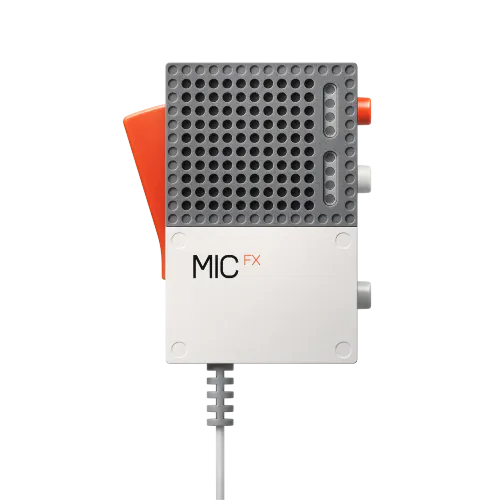 EP–2350 FX–MIC came in at rank 6 with 210 votes, but only 3 comments, which gives the launch a very different texture from the software-heavy products above it. This is a standalone handheld performance microphone with built-in effects, four on-board samples, and a parameter modulation lever. It is designed for people who want to shape vocals and trigger sounds directly from the mic, then customize sample slots and presets through a simple JSON file. The product is as much an instrument as it is an audio accessory.
That specificity is what likely made it compelling. Teenage Engineering products often do well when they are presented less as utility hardware and more as carefully designed creative objects, and this launch fits that pattern. It is clearly for a narrow audience, but a passionate one: performers, tinkerers, and people who enjoy expressive hardware. The modest comment count may reflect that niche focus, while the vote total suggests the design and concept were enough to capture broad interest even among people who might never buy one.
7BrandMyLaptop
 BrandMyLaptop landed at rank 7 with 175 votes and 16 comments, and it wins attention through a concept that is simple enough to explain in one sentence: sell ad space on your laptop. The launch is a marketplace where brands buy sticker spots on a laptop lid, and the maker gives users control over their machine, their prices, and their terms. That clarity is probably a big part of the appeal. There is no need to decode a long product stack before understanding the idea.
What helps this sort of launch on Product Hunt is that it is easy to picture, easy to debate, and easy to share. It sits at the edge of labor, personal branding, and internet economics, which naturally invites reaction. The product does not ask people to believe in a broad platform; it asks them to consider a single novel exchange. That makes the lower vote count relative to the top ranks feel less like a weakness and more like a sign that the product is deliberately unconventional.
8Orato
 Orato took 8th place with 143 votes and 4 comments, and its pitch is refreshingly direct. It is a speech practice app where you pick a drill, speak for 30 to 90 seconds, and get scored on pacing, fluency, vocabulary, and coherence. The product also surfaces every filler word and long pause in a transcript, which turns subjective performance into something you can actually review. On an iPhone with Apple Intelligence, it runs on device and without an account, which gives it a strong privacy and convenience angle.
That combination of feedback and low-friction use is likely what made it appealing. Speaking practice tools often fail when they feel too heavy, too academic, or too much like homework. Orato avoids that by making the drill short and the correction immediate. The small comment count suggests the product is more quietly practical than divisive, but the vote total shows there is meaningful demand for helping people improve speaking without a classroom or coach.
9Radar by Particle
 Radar by Particle came in 9th with 142 votes and 8 comments, and it makes a strong case for a category many people still treat as underserved: podcast search. The pitch is blunt in a good way. The web is searchable, and podcasts should be too. Radar indexes more than 130,000 actively transcribed podcasts, with around 20,000 new episodes every day, making huge amounts of audio searchable by topic and phrase. It is also powered by Particle’s Podcast Intelligence API, which allows agents to search across podcasts through API or MCP.
The launch stands out because it solves a real discovery problem rather than just adding another listening interface. Podcasts contain a lot of timely, thoughtful discussion, but the value is often trapped in a format that is hard to query. By framing the product as search infrastructure for both humans and agents, Particle gives the launch a broader technical relevance. The vote and comment numbers suggest interest from users who see podcast search as both a consumer feature and a data capability.
10FrameOS
 FrameOS closed out the top ten at rank 10 with 135 votes and 10 comments. Its job is clear: record iPhone, iPad, and Android app demos from a Mac, then add camera, microphone, transitions, zooms, masks, and polished exports. It is a focused screen recording and presentation tool, built for the specific problem of showing mobile apps in a way that looks intentional rather than raw. That makes it a natural fit for founders, product marketers, and indie developers who need clean assets without building them frame by frame.
The positioning works because it is concrete and narrowly useful. Instead of trying to become a general video editor, FrameOS stays close to the workflow of demo creation. The lower vote count compared with the top few launches likely reflects the more specialized audience, but the comments show enough engagement to suggest that people understand the value quickly. On a day full of AI-assisted creation, FrameOS is a reminder that simpler production tools still earn attention when they solve one painful job well.
What founders can learn from this launch day
The biggest lesson from 2026-08-31 is that Product Hunt still rewards products with a crisp point of view. The launches that performed best did not try to be vague platforms for everything. They were specific about the job, specific about the user, and specific about the part of the workflow that stays under human control. Video Agent by Fotor, Revolte, and BrandJet all landed because they made a complicated category feel operationally useful instead of abstract.
Another clear pattern is that control matters nearly as much as automation. Even the AI-heavy products did well by showing where humans can inspect, approve, or edit the output. That shows founders where the market is right now: people want speed, but they do not want to feel locked out of the process. The strongest launches did not hide the machinery. They made the machinery legible.
There is also room for products that are simply delightful, as long as the delight is real. Tether and BrandMyLaptop are unusual in different ways, but both got attention because the concept is easy to visualize and hard to forget. Meanwhile, the hardware and audio tools on the list suggest that Product Hunt still has room for products that are tactile, niche, and opinionated. In other words, novelty helps, but clarity is what keeps the novelty from feeling gimmicky.
For founders planning their own launch, this day is a reminder to lead with the exact friction you remove. The products that rose to the top were not just interesting ideas. They were answers to specific problems people already recognize in their work, their creative process, or their daily routines. That is usually the difference between a launch people glance at and a launch they actually talk about.
