
September 10 on Product Hunt had a clear theme: founders are still building for an AI-native workflow, but the products that rose to the top were the ones that promised control, not just capability. The day’s leaders were not abstract demos. They were systems for customer support, observability, design, documentation, translation, and site audits, all trying to make AI safer, more useful, or easier to trust in production.
That mix matters for founders because it hints at where the market is maturing. The best-performing launches did not simply say “we use AI.” They explained exactly what the AI replaces, what it monitors, what it can test, and where humans still stay in the loop. Even the consumer-facing entries leaned on practical gains: more display, better noise cancellation, live translation, or more flexible music editing. In other words, the day rewarded specific promises tied to real workflows.
1Typewise Nova
 Typewise Nova took the top spot with 335 votes and 60 comments, and the ranking makes sense once you read the pitch. This is not another chatbot wrapper. Nova positions itself as an AI operator that builds and improves a customer experience team for you, starting from plain-language instructions and the tools you already use. It says it can generate the agents, test them against past tickets, show failures before launch, and then keep proposing fixes around the clock once they are live.
That positioning is sharp because it speaks to the hardest part of AI customer support: reliability. The promise is not simply that AI can answer questions, but that it can resolve full requests across email, chat, and WhatsApp, including orders, refunds, and plan changes. The “unresolved requests are free” line also signals confidence in the product’s practical usefulness, which likely helped it connect with founders looking for something that feels operational rather than experimental.
The comments count suggests that people were not just clicking upvote and moving on. Sixty comments on a launch in first place usually means the product triggered a real conversation about trust, automation, and how much control companies are willing to give to software. Typewise Nova stood out because it framed AI support as a managed system, not a magical agent.
2AI Observability by OpenObserve
 OpenObserve landed at rank 2 with 304 votes and the day’s highest comment volume among the top entries, at 115. That combination says a lot. Observability is a founder problem only when AI systems start costing real money, taking real time, and failing in ways that are hard to explain. OpenObserve’s pitch speaks directly to that pain by tracing every agent session across models, tools, services, datastores, and user sessions so teams can see exactly where time, money, and quality went.
The product is positioned as OpenTelemetry-native, which matters because it anchors the launch in existing production infrastructure instead of asking teams to adopt a separate AI-only monitoring world. It also leans into practical debugging language: detect loops, run online evals, and follow failures from the LLM call through backend and database systems. That sort of pitch tends to resonate with engineers because it promises visibility without forcing a rewrite.
The high comment count suggests the audience saw this as more than a niche infrastructure tool. AI observability is becoming a shared concern across teams shipping agents and LLM features, and OpenObserve seems to have benefited from that shift. Its strong rank despite being less flashy than some consumer launches indicates a real appetite for infrastructure that helps teams understand where AI systems go wrong.
3iPhone Duo
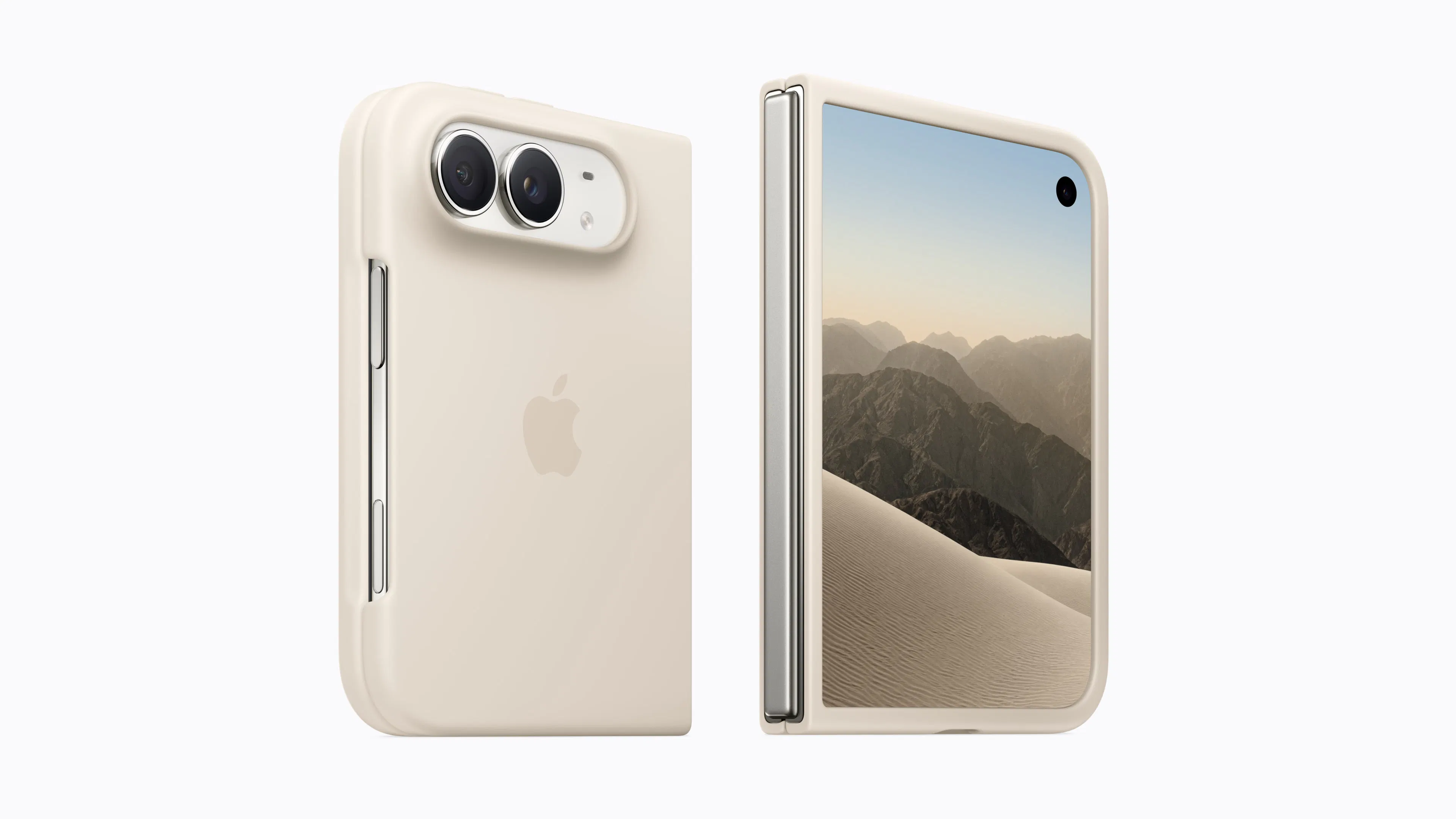 At rank 3 with 265 votes and 21 comments, iPhone Duo was the kind of launch that naturally draws attention because the product category is instantly legible. The pitch describes the first foldable iPhone, emphasizing the largest iPhone display ever when open, a thin pocketable design, and an outer screen with more than 90 percent of the screen area of iPhone 18 Pro. The wording intentionally mirrors how hardware launches build desire: bigger, thinner, more flexible, and still familiar.
This is a strong example of positioning through a familiar product name and a novel form factor. The description does not try to teach the audience what a foldable phone is. Instead, it places the device inside Apple’s existing family and highlights the payoff in terms users can imagine immediately. That likely helped it stand out, especially on a day crowded with AI products, because it offered a different kind of novelty: hardware rethought around a known platform.
The lower comment count compared with the top two suggests people were more eager to vote than debate. That is often what happens with a launch that feels more like a polished reveal than a problem-solving tool. Still, third place with 265 votes is a strong signal that the market continues to reward bold product form factors, especially when they are framed as incremental advantages over a familiar flagship line.
4AirPods 5
 AirPods 5 came in fourth with 202 votes and just 1 comment, which is about as close as you get to a pure announcement-style launch on Product Hunt. The description leans into three headline features: 1.5x active noise cancellation, AI Siri, and live translation. It also keeps the use case broad, framing the product for calls, workouts, and everyday listening, with availability set for September 18, 2026.
What stands out here is the clarity of the feature stack. Apple’s hardware launches often win attention because they are easy to summarize in a single breath, and this one is no different. The pitch does not overexplain the product or position it as a platform shift. Instead, it presents a straightforward upgrade to an already deeply familiar accessory, with AI and translation folded into a mass-market audio product.
The single comment tells its own story. This was likely more of a voting event than a discussion event, which makes sense for a consumer electronics launch with a highly polished, self-explanatory message. Still, rank 4 and 202 votes show that users were interested enough to place it near the top, probably because the promised features are tangible and easy to compare against prior versions.
5Live Captions by Subanana

This is the sort of launch that works because it solves a real communication bottleneck rather than a vague productivity problem. The product is clearly aimed at conferences, live events, and hybrid presentations where multilingual access matters but setup time and friction do too. By making the audience bring their own device, Subanana avoids complicated hardware deployment and keeps the interaction simple enough to explain in one sentence.
The comments count suggests practical curiosity. People likely wanted to know how it would fit into existing event workflows and broadcast setups, which is exactly where the OBS and vMix mention helps. In a day dominated by AI infrastructure and consumer hardware, Subanana stood out by focusing on inclusion and delivery mechanics. It is a narrow use case, but a vivid one.
6Suno v6
 Suno v6 placed sixth with 165 votes and 4 comments. Its pitch signals an important product evolution: the first Suno model built with the music industry. That phrase alone does a lot of work. It suggests not only better output, but also a more mature commercial and creative relationship around the model itself, which is a meaningful distinction in a category where licensing and legitimacy matter.
The feature set is about control and flexibility. Suno says users can edit a single section or lyric without rebuilding the whole track, mash up their own songs, and start from text, audio, images, or video. Those are useful positioning choices because they move the product away from one-shot generation and toward iterative creation. For musicians and creative teams, that kind of editing workflow is often more valuable than novelty alone.
The relatively light comment volume compared with its vote total suggests the pitch was broadly appealing but not especially controversial. That can be a good sign for a creative tool: users see enough utility to support it, but the product is self-evident enough that it does not trigger deep debate. Suno v6 likely benefited from brand familiarity as well as from a message that makes AI music feel more editable and less disposable.
7FreeScan.app
 FreeScan.app landed at rank 7 with 132 votes and 25 comments, and it came across as a surprisingly broad utility wrapped in a simple promise: fix what is hurting your visibility, trust, and conversions. The free scanner audits any public URL without signup and looks across SEO, AEO, GEO, security, accessibility, and design. Each finding includes evidence, a reason it matters, and guidance on how to fix it.
That is a strong founder-facing positioning strategy because it speaks to a pain many teams know they have but do not always prioritize. FreeScan is not just identifying issues; it is turning them into actionable work. The Pro version extends that into site-wide audits, workspaces, regressions tracking, agent-ready artifacts, MCP connections, uptime monitoring, and weekly reports. In other words, it is trying to become a system of record for web quality.
The votes and comments suggest a product with a wider audience than the category might imply. Site audits can sound dull until they are tied to metrics people care about. FreeScan does that well by bundling discoverability, trust, and conversion into one narrative. Its position on the day likely reflects how useful it feels to teams that want concrete diagnostics instead of abstract guidance.
8Desert Ant Labs
 Desert Ant Labs finished eighth with 133 votes and 5 comments, just one vote ahead of the product below it, which makes the middle of the leaderboard especially tight. The pitch is clearly aimed at developers who want on-device AI without the ongoing cost or latency of cloud inference. Desert Ant Labs builds small specialized models for speech, text, and vision that run on a phone or browser, with no internet required and no per-use cost.
The positioning is compelling because it argues against the default assumption that one large model should do everything. Instead, it proposes many small ones that each solve a specific task well. That philosophy is attractive to builders who care about latency, privacy, and cost predictability. The one-SDK integration and free tier up to 100k monthly active devices help make the idea feel practical rather than purely architectural.
The low comment count relative to votes suggests this was a quietly appreciated technical launch. It likely resonated with developers who understand the tradeoffs immediately, even if they did not all stop to discuss them publicly. Desert Ant Labs stands out because it gives AI teams an offline, cost-conscious alternative at a time when cloud usage remains one of the most visible constraints in the category.
9Modeinspect
 Modeinspect ranked ninth with 128 votes and 12 comments, and its pitch reflects a problem many product teams know too well: design intent drifts between the mockup and the implementation. Modeinspect tries to close that gap by letting teams design UI directly in the codebase, using the actual components, tokens, live data, states, and breakpoints that ship in production.
The positioning is thoughtful because it reframes design as a working layer on top of the product, not a separate artifact. The line about the canvas not being the destination, and the product being the destination, is doing important strategic work. It tells buyers that the tool is meant to speed up the journey into real code or a live publish, rather than become another isolated design environment.
Twelve comments on 128 votes suggests there was enough interest to prompt discussion, but not enough friction to turn the launch into a debate. That balance often indicates a product with a clear user and a clear promise. Modeinspect likely stood out by making AI feel embedded in the actual software process instead of sitting beside it.
10Thousand
 Thousand rounded out the top 10 with 103 votes and 10 comments. It is a documentation product, but one with a sharper architectural angle than most. The pitch says it offers Git-backed docs in a single markdown repo with real access control, where teammates, outsiders, and AI agents each see exactly the folders they should. That framing makes the product feel built for a world where humans and agents both need structured access to knowledge.
This kind of positioning is effective because it takes a familiar category and updates it for a new operational reality. Docs are no longer just for internal readers, and access control now has to account for machine consumers as well. By leaning into folder-level permissions and a markdown repository model, Thousand signals that it values developer-native workflows over a marketing-friendly veneer.
Its spot in the top 10 suggests steady interest rather than viral heat. That is often what a product like this earns: enough clarity and utility to be credible, but not enough spectacle to dominate the day. Still, in a field crowded with note-taking and knowledge tools, Thousand’s combination of Git, permissions, and AI agent access gives it a distinct lane.
What founders can learn from this launch day
The biggest lesson from September 10 is that specificity still wins. The launches that rose highest did not describe abstract possibilities. They described exact jobs to be done, exact environments, and exact failure modes. Typewise Nova talked about testing against past tickets before going live. OpenObserve showed where time and money disappear inside agent sessions. FreeScan explained what kinds of issues it would surface and why they matter. Those details make a launch feel real, which is often what earns both votes and comments.
A second pattern is that trust is becoming a core product feature, not a nice-to-have. Several launches were essentially control layers around AI and software quality. Nova promises testing and monitoring. OpenObserve gives visibility into agent behavior. Modeinspect keeps design changes tied to the actual codebase. Thousand brings access control to docs in a way that accounts for both people and agents. Founders shipping in AI-heavy categories should take note: buyers want tools that make the system legible, reversible, and testable.
There is also a useful lesson in the mix of launches that reached the top 10. Some were infrastructure plays, some were consumer hardware, and some were workflow tools for events, music, design, and documentation. What they shared was not a category, but a crisp product promise. Even the launches with only a handful of comments earned attention by making their value easy to understand in one read. On Product Hunt, clarity is not a substitute for depth. It is often how depth gets noticed in the first place.
