
Product Hunt on July 11 looked less like a single theme and more like a snapshot of where builders are trying to remove friction. The day’s top products ranged from developer infrastructure and enterprise access control to consumer wellness, a startup game, and even a hiking sensor network. That mix matters because it shows how broad “useful” has become: some teams are shipping tools that quietly disappear into workflows, while others are trying to make a complicated task feel approachable enough that people will actually start.
What also stood out was how many launches leaned on immediacy. Several of the highest-ranked products promised something to happen right away in the browser, in the terminal, in a Mac menu bar, or on a device without a server round trip. That emphasis on speed and locality suggests that founders are still winning attention by reducing setup, reducing waiting, and reducing trust friction. The vote and comment totals across the day tell a similar story: the launches that sparked the most conversation were often the ones that were easiest to understand in a sentence, even when the underlying technology was sophisticated.
1Effects SDK
 Effects SDK took the top spot with 464 votes and 111 comments, and the result makes sense once you read the positioning. This is not just another AI feature wrapper. It is an SDK for developers who want to add background blur, virtual backgrounds, smart framing, lighting correction, beautification, overlays, avatars, and real-time noise suppression into web, desktop, and mobile apps, all client-side. That “client-side” detail is the kind of technical promise that resonates with developers because it speaks directly to performance, privacy, and cost.
The launch also framed itself as production-ready, which is a helpful signal in a category where demos are easy to build but harder to trust. By emphasizing that video and audio do not have to be sent to servers, Effects SDK positioned itself as infrastructure rather than novelty. Its strong vote total suggests that Product Hunt users responded to that practical framing, while the comment count points to a product that likely raised real implementation questions rather than just admiration. When a launch like this finishes first, it usually means it hit a nerve with builders who are already thinking about realtime AI experiences.
2Cloudflare Drop
 Cloudflare Drop finished second with 345 votes and 68 comments, and it earned attention through sheer simplicity. The pitch is almost disarmingly direct: drop a folder or zip in the browser and see your site live on Cloudflare’s global network in seconds. No account is needed, and the deployment stays active for 60 minutes unless you claim it. That combination makes the product feel like a fast path for testing, sharing, or validating something without the usual deployment ceremony.
The positioning here is smart because it compresses the emotional distance between idea and live preview. For founders, that is often the real bottleneck. Cloudflare Drop appears to have stood out because it removes a series of small but annoying steps that usually sit between “I have files” and “people can see the site.” The vote count indicates broad approval, while the lower comment count suggests the concept landed cleanly without requiring a long explanation. In a day full of ambitious tooling, this one won by making a familiar task feel almost frictionless.
3San Fran Sim
 San Fran Sim came in third with 303 votes and 117 comments, which is one of the more conversation-heavy results on the board. The product is a startup tycoon game that lets you run a software company from garage to IPO, ship features, squash bugs, hire a team, survive burn rate, and learn SaaS metrics like MRR, churn, LTV, and CAC along the way. The dry announcer and the inclusion of a dog in the staffing fantasy give it a very specific tone, and that specificity is probably part of why it attracted so much interaction.
Unlike most of the day’s utility-focused launches, San Fran Sim is explicitly playful, but it still hits founder nerves because the mechanics mirror real startup pressure. Free in the browser and requiring no signup, it lowers the barrier to curiosity in a way many creator tools do not. The comment volume suggests that people did more than click; they wanted to react, joke, and compare notes. That is often what happens when a product manages to be both self-aware and legible to its target audience. It feels like entertainment, but it also feels uncomfortably close to work.
4ChatGPT Work
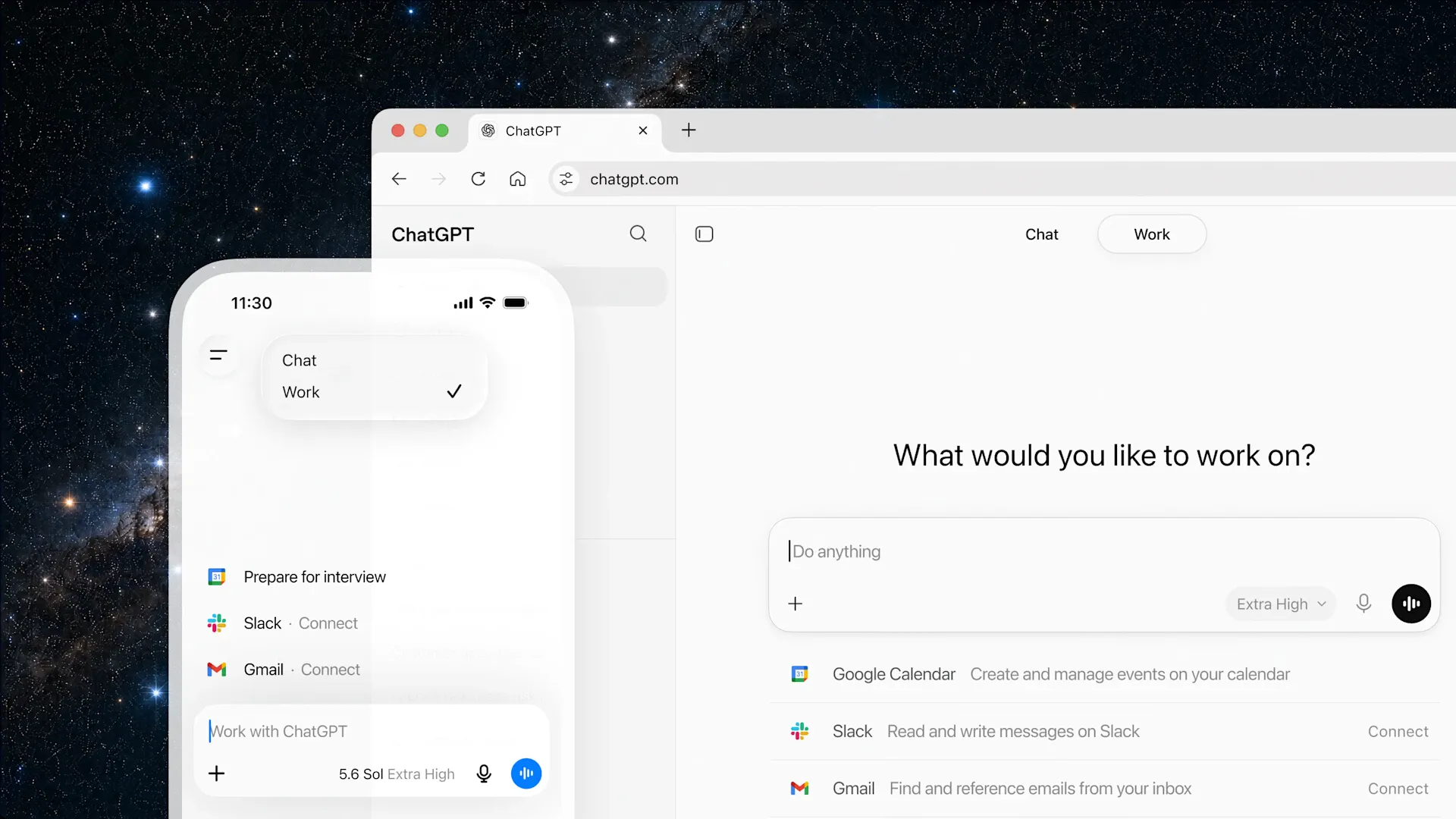 ChatGPT Work landed fourth with 234 votes and 79 comments, and its positioning is all about persistence and action. Rather than presenting itself as a chat interface, it describes itself as a partner for ambitious work, one that can take action across apps and files, stay with a project for hours if needed, and turn a goal into finished work. That framing moves the product away from novelty and toward delegated labor, which is exactly where many users now expect AI to go.
What likely helped it stand out was the promise of continuity. A lot of AI tools can answer questions; fewer can stay with a task long enough to feel operational. By emphasizing hours-long work sessions and cross-app execution, ChatGPT Work addresses a familiar limitation in current AI workflows. The vote and comment numbers suggest that people saw real potential here, but also probably had questions about reliability, control, and how much can actually be delegated. That tension is part of why the launch drew attention: it pointed directly at the next expectation users have for AI systems.
5Kickbacks CLI
 Kickbacks CLI reached fifth place with 186 votes and 95 comments, and it is a good example of how a narrow utility can get noticed when it lives where its users already work. The product is a terminal and Mac menu bar companion for Kickbacks.ai, showing status, live earnings, and ad history. The launch makes a clear bet that people managing this workflow want visibility without opening a separate dashboard every time.
That kind of companion tooling often performs well when the parent product already has a defined user base, because it extends the core experience into daily habits. The strong comment count relative to votes suggests that this was not just a passive utility launch; people likely had opinions about the workflow, the visibility it creates, or the value of bringing earnings data directly into the terminal. The product’s appeal seems to come from convenience and constant awareness rather than breadth of features. Sometimes the best companion product is simply the one that keeps important numbers in sight.
6SoundPipe
 SoundPipe came in sixth with 158 votes and 107 comments, which is a notable comment-heavy result for a Mac utility. It presents itself as a mixing board for your Mac by creating virtual audio devices so you can send audio from any app or your microphone to any other app. That is the sort of utility people only appreciate fully once they have needed it, which may explain why the launch drew a lot of discussion around a relatively specialized problem.
The product’s positioning is practical and immediate. It does not try to reinvent audio workflow; it tries to make the routing problem less painful. With comments almost matching votes, SoundPipe appears to have triggered real interest from users who understand how frustrating audio routing can be on macOS. It likely stood out because it turns an opaque technical task into something more visual and manageable. For founders, that is a useful reminder that you do not always need a broad audience if you can solve a sharp pain point with clarity.
7Basedash SCIM
 Basedash SCIM finished seventh with 161 votes and 115 comments, and the engagement level suggests that identity and access management remains a serious topic for enterprise buyers. The launch focuses on keeping workspace identity aligned with the directory a company already manages, so when people join, move teams, or leave, users, groups, and organization memberships stay current. Paired with SSO, RBAC, and RLS, it is aimed at reducing cleanup and giving teams more confidence to roll Basedash out without turning identity administration into a bottleneck.
The strongest thing about this positioning is that it translates a technical standard into a business benefit. SCIM is not exciting on its own, but “your org changes. access keeps up.” makes the value obvious. The high comment count probably reflects the fact that enterprise identity is rarely simple, and builders know there are lots of edge cases hidden inside that promise. Still, the product appears to have stood out because it speaks to a real source of operational pain. When infrastructure launches do well, it is often because they reduce the fear of scaling a product inside larger organizations.
8Breathing In Labour
 Breathing In Labour took eighth place with 148 votes and 99 comments, and it stands apart as one of the more thoughtful consumer launches of the day. It is a distraction-free breathing app for labor preparation, built as an educational alternative to cluttered and ad-heavy apps. The product leans into a hyper-minimalist interface, calming visual feedback, and zero ads or forced accounts, with core mechanics that are free to use.
That combination of emotional context and functional restraint is likely what helped it get noticed. This is not a general wellness app; it is narrowly focused on a specific, high-stakes moment, and the launch speaks directly to the need for calm, trust, and simplicity. The vote total is healthy, but the comment volume suggests the topic itself invited more than casual browsing. People probably responded to the seriousness of the use case as much as the product design. For founders, this is a useful example of how a product can stand out by refusing to overcomplicate a vulnerable moment.
9Trailsense
 Trailsense was ninth with 31 votes and 10 comments, which is a much smaller result than the launches above it, but the concept is memorable. It uses solar-powered nodes to count hikers with anonymized wifi probe requests, then turns those counts into a dashboard showing how busy each trail is over time. The product’s core promise is unusually specific: no cameras, no app for hikers to install, and no personal data leaving the device.
What makes Trailsense interesting is the way it translates a physical-world problem into a privacy-conscious sensor system. That is a more unusual launch than most people see on Product Hunt, and it probably needed more explanation than the average software tool. The lighter vote total reflects that it may be niche, but the idea itself is strong because it solves a real operational question for trail managers, parks, or outdoor sites. In a day dominated by software for founders and builders, Trailsense brought a hardware-and-data perspective that felt refreshingly different.
10Investor Updates
 Investor Updates rounded out the top 10 with 31 votes and 16 comments, and it addresses one of the most universal but least glamorous startup chores. The product is built to help founders keep angels and venture capitalists informed by sending bulk updates about traction, growth, hires, failures, and milestones. The pitch is straightforward, almost sober, and that may be exactly why it works: most founders know they should send updates, but many would prefer a faster, more structured way to do it.
The launch’s modest vote count does not make the idea any less relevant. In fact, products that handle back-office founder hygiene often gain credibility precisely because they aim at a recurring task rather than a flashy one. Investor Updates appears to have stood out by making a relationship-management habit easier to maintain at scale. The comment count suggests enough interest to justify conversation, likely because almost every founder has felt the cost of inconsistent investor communication. It is a practical launch for a practical problem, and those often age better than the more gimmicky ideas.
What founders can learn from this launch day
The clearest lesson from July 11 is that specificity still wins attention. The launches that rose highest were rarely broad promises. They were narrow, legible, and easy to place in a founder’s mental map: add AI effects to realtime apps, deploy a folder instantly, delegate work across apps, route audio between Mac apps, or keep investors updated in bulk. Even the more playful products earned traction because they translated a familiar pain or fantasy into a crisp product story.
A second lesson is that product positioning matters as much as feature depth. Several launches could have been described in more generic terms, but the ones that performed well leaned into the exact benefit users could grasp right away. “No account needed,” “client-side,” “free in your browser,” and “zero ads or forced accounts” are not just details; they are trust signals. Founders often spend too much time proving how advanced a product is and too little time proving how little friction it creates.
The comments also hint at an important pattern: products that touch workflow, identity, or emotion tend to trigger more discussion than products that simply sit in a narrow utility lane. ChatGPT Work, SoundPipe, Basedash SCIM, and Breathing In Labour all invited questions because they sit close to how people actually operate day to day. That does not mean every launch needs debate. It means that if you want attention on Product Hunt, you need a promise that users can evaluate quickly and care about immediately.
For founders planning their own launch, this day is a reminder to choose one sharp story and let the product back it up. The best launches were not trying to be everything. They were solving a concrete problem, speaking in plain language, and giving people a reason to believe the product would save time, reduce complexity, or make a difficult task feel manageable. That combination still travels well on Product Hunt.
