
Launch days are always a mix of novelty, utility, and timing, but this one had a particularly clear theme: products that reduce friction at the edges of modern work. Some launches tried to make AI cheaper or easier to route, others tried to remove the hidden coordination tax that slows down teams, and a few leaned into the personal layer of computing by turning notes, boards, and even the Mac notch into something more useful. The result was a day that felt less like a grab bag and more like a snapshot of where founders think real attention lives right now.
What stands out most is how many of the top products promised to collapse a messy workflow into one simpler system. Whether that meant routing coding tasks to the right model, giving developers a broader cloud platform, or making scheduling behave more like a human assistant, the strongest launches were all about removing repeated decisions. The vote totals and comment counts suggest Product Hunt responded to that message, but the spread also shows there is still plenty of room for products that are playful, personal, or simply elegant in a crowded category.
1Weave Router 2.0
 Weave Router 2.0 arrived with a very founder-friendly promise: let coding agents use the right model at the right time, and do it without making the user think about quota or cost. The product positions itself as a subscription-aware coding agent router, which is a precise way of saying it tries to make existing plans work harder by sending each request to the cheapest model that can still do the job well. Its framing is unusually practical for an AI launch. Instead of claiming to redefine development, it focuses on saving money, preserving quality, and keeping the workflow moving.
That clarity likely helped it take the top spot with 331 votes and 46 comments, a strong signal for a product that speaks directly to developers already juggling multiple model subscriptions. The description leans on performance proof, noting that on Terminal-Bench 4.0 and SWE-Atlas it matches GPT-6 Astra at half the cost and twice the speed. Those numbers matter because they turn the product from a routing layer into a concrete efficiency play. The mention of a new classifier for task complexity and cache-aware switching also suggests the team knows the product has to feel intelligent, not merely opportunistic.
What probably helped Weave stand out is that it addresses a real pain founders and engineers understand immediately: the complexity of using multiple agents and models without wasting time or money. Many AI tools promise power; fewer can explain why their orchestration layer should matter. By anchoring the launch in economics, speed, and selective routing, Weave made its case in a way Product Hunt voters could grasp fast.
2Appwrite 2.0
 Appwrite 2.0 reads like a serious platform reset rather than a cosmetic upgrade. The launch describes a second major generation of the open-source cloud for agents and developers, and the language makes clear that this is not just a feature release. It replaces the engine underneath, rebuilds the Console on top, and expands the platform to handle relational, schemaless, and vector data alongside native PostgreSQL and MySQL engines, S3-addressable storage, and standards-compliant identity. For builders, that is a strong pitch: fewer stitched-together services, more of the stack in one place.
Its rank of 2, with 240 votes and 27 comments, suggests that the market still responds to infrastructure launches when they feel broad and credible enough. Appwrite has the advantage of familiarity, but the launch language does more than rely on brand recognition. It frames the product as a cloud that can now cover the realities of both agentic apps and traditional developer workflows. That wider scope is important because many infrastructure products struggle to explain who they are for once the market starts shifting; Appwrite seems to be answering that by expanding rather than narrowing.
The launch likely stood out because it offered depth rather than a single flashy promise. Founders building on top of AI still need databases, auth, storage, and networking to work together, and Appwrite 2.0 speaks directly to that need. A project that can hold multiple data models and identity layers while keeping its open-source foundation has a natural appeal to technical teams that want control without assembling every piece themselves.
3Gemini 3.8 & 3.8 Live Extended Thinking

Gemini 3.8 and 3.8 Live Extended Thinking landed with the kind of announcement that immediately signals scale. The product is positioned as Google’s most advanced live dialogue model yet, built for natural conversation. That is a concise framing, but a powerful one. It tells readers this is not about a niche demo or a narrow benchmark claim; it is about improving how an AI sounds and responds in real time, which is a more emotionally legible promise for everyday users and developers alike.
With 205 votes and only 4 comments, the launch’s engagement pattern is interesting. It earned a strong rank of 3, which suggests broad interest, but the comment count is relatively low compared with the vote total. That often happens when a product is perceived as obviously important or when the launch comes from a major player whose announcement speaks for itself. In this case, the maker listed is Sundar Pichai, and that alone signals why the post drew attention. Big-model launches tend to get watched closely because they influence expectations across the entire AI ecosystem.
What likely helped this product rise is the combination of brand weight and a clear use case. “Live dialogue” is easy to understand, and “extended thinking” hints at a more deliberate mode for harder interactions. In a launch day filled with productivity tools and developer infrastructure, this one offered a reminder that foundational AI model releases still command attention when they are framed around real conversational quality rather than abstract capability.
4Toki Coordination
 Toki Coordination targets one of the most annoying, universal bottlenecks in work: getting people to agree on a meeting time and keeping that meeting alive after the first cancellation. The product presents itself as a personal assistant for scheduling and follow-up, and the pitch is refreshingly concrete. It will email attendees, negotiate a time that works, follow up if needed, and send invites. It also promises to protect your time, remember preferences, and help prioritize urgent deadlines. In other words, it aims to behave less like a calendar add-on and more like the human assistant founders wish they had.
Its rank of 4 with 197 votes and 24 comments suggests that this sort of operational pain still resonates strongly. The launch copy makes a clear economic argument as well, noting that it is now free instead of costing tens of thousands. That comparison is doing a lot of work. It positions Toki not as a novelty but as a serious substitute for a traditionally expensive service layer. For small teams and busy founders, that framing can be compelling because it turns convenience into direct budget savings.
Toki likely stood out because it addresses coordination friction in a way that feels immediately useful. Many AI products live in the abstract; this one is grounded in the repetitive emails and calendar churn that consume real hours. Product Hunt tends to reward tools that can be understood in a sentence, and Toki’s sentence is simple: it takes over the tedious parts of scheduling so people can stop starting over every time someone cancels.
5CAT ME app
 CAT ME app is the most playful launch in the top five, and it earns that position by making its purpose instantly obvious. The product turns a photo of a person into a cat lookalike, generating what it calls a “Purrtrait” based on the original image. The concept is deliberately simple: take a picture, transform the subject into a cat that reflects their look and personality, and share the result. In a launch day full of serious infrastructure and AI orchestration, this kind of product provides a different kind of social utility.
With 156 votes and 15 comments, CAT ME app performed well enough to show that novelty still has room on Product Hunt when it is tightly packaged. The ranking at 5 suggests it did more than amuse people; it offered a clear, shareable experience. The launch copy emphasizes how the AI transforms human features, expressions, hairstyles, and accessories into a cat version, which is the sort of detail that helps people immediately imagine the output. That visualization matters a lot in consumer AI, where the product is often judged before anyone touches it.
What likely helped the app stand out was its low-friction, high-virality premise. People understand the joke in a second, and the product naturally invites comparison, sharing, and light social play. It does not need a complex explanation or a long setup. It simply gives people a funny way to see themselves, which is often enough to earn attention in a crowded launch feed.
6Expand Board for macOS
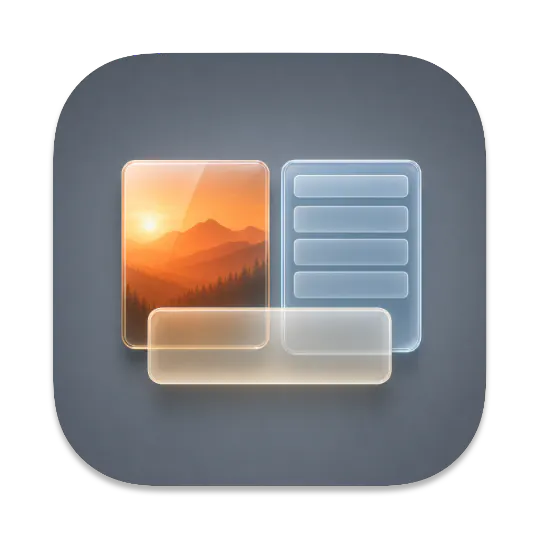 Expand Board for macOS is trying to make spatial thinking feel native on the desktop. The product describes itself as a board for placing text, images, files, and shapes on an open canvas, with the added twist that boards can be nested and entered like spaces within spaces. That gives it a more structured feel than a generic whiteboard. The launch copy spends time on interaction detail, explaining how to add items, drag to arrange them, and use breadcrumbs to move back up through nested boards. That level of specificity suggests the team wants users to picture themselves organizing real work, not just pinning loose ideas.
The product reached rank 6 with 132 votes and 14 comments, a respectable showing in a category that often competes on design intuition rather than raw necessity. The presence of a maker handle, @sgroiga, also adds a personal indie feel that may have helped the product connect with Product Hunt’s builder audience. For a macOS app, the launch seems to understand that people care about how something feels as much as what it does, especially when it promises an open canvas and nested structure.
Expand stood out because it offers a clearer mental model than many board tools. The word “limitless” can easily sound vague, but here it is paired with a practical system for nesting and navigating boards. That makes the product feel like a workspace for ideas, concepts, and plans instead of a blank canvas trying to be everything at once.
7Thread
 Thread is another entry in the personal memory and journaling space, but its framing tries to push beyond simple note capture. The product is described as an AI journal and second brain for capturing thoughts, ideas, notes, and voice recordings, then automatically connecting related memories and finding patterns in your thinking. That positioning matters because it moves the product from storage into interpretation. Thread is not just asking users to write things down; it is promising to make sense of what they already captured.
At rank 7, with 125 votes and 6 comments, Thread had a quieter but still notable reception. The lower comment count suggests it may have been easier for voters to understand than to debate. Its promise of private AI-powered memory is a familiar one, but the emphasis on connecting scattered thoughts into meaningful threads gives it a slightly more reflective tone than many productivity launches. That can matter on Product Hunt, where some products win by being immediately useful while others win by signaling a long-term relationship with the user’s life and work.
The product likely stood out because it addresses a persistent founder problem: ideas arrive fragmented, and the act of turning them into action is often the hard part. By combining journaling, voice capture, and pattern recognition, Thread offers a workflow that feels more like external cognition than simple note-taking. That is a powerful promise if the product can keep the experience private and frictionless.
8Twigg
 Twigg is aimed directly at developers building with language models, and its pitch is to remove the burden of context management altogether. The product calls itself the context layer you never have to build, which is a strong positioning line because it speaks to a very real amount of invisible engineering work. Instead of rebuilding and resending entire conversations on every request, users create a chat once and send only the next event. Twigg handles the state, fits context to the target model’s schema, compacts or truncates when needed, and routes the call.
The launch reached rank 8 with 121 votes and 9 comments, which indicates a healthy technical audience response. This is the kind of product that likely earns appreciation from builders who have already felt the pain it solves. The description also includes control over tool schemas, system prompts, context windows, usage, and billing from the dashboard, which makes it feel complete rather than narrowly experimental. For founders building agentic products, that completeness is often what separates a useful layer from another component to maintain.
Twigg likely stood out because it translates a hidden engineering problem into an obvious operational advantage. “You never manage context again” is the kind of statement that lands with developers because they know exactly how much repeated effort it implies. The product’s strength is not in spectacle but in removing a class of work that teams do not want to keep rebuilding.
9ZeroClick
 ZeroClick takes one of the more speculative but increasingly serious questions in software distribution and turns it into a product: what does it mean to sell to AI agents? The launch positions the product as a storefront layer that helps businesses make their API or product discoverable and purchasable by agents, with payments, pricing controls, and transaction tracking in one place. That is a distinct angle because it does not just assume agents will browse like people; it treats them as a new kind of buyer with different expectations and mechanics.
Ranked 9 with 120 votes and 10 comments, ZeroClick held its own in a crowded field. The vote count is close to the product in the 10th slot, which suggests a tight race among launches that all needed to find their audience. The fact that ZeroClick is free to start and includes help getting set up likely lowered the barrier for founders who are curious about agent commerce but not yet ready to build the full stack themselves. The launch has a practical edge that can make abstract trends feel implementable.
What probably helped it stand out is the specificity of the problem statement. Plenty of launches talk about AI’s future; fewer try to define the commercial interface around AI agents in a way businesses can act on now. By focusing on storefronts, pricing, and tracking, ZeroClick makes the category tangible rather than theoretical.
10Fide Island
 Fide Island rounds out the top 10 with a distinctly Mac-native utility play. The product turns the MacBook notch into something closer to a Dynamic Island, surfacing media, Apple Notes, on-device translation, calendar, files, clipboard, and quick tools in one place. That is a concise product story, but it is also one that leans heavily on the physical design of the laptop itself. Rather than building another menu bar app that competes for attention, Fide Island uses a space users already see constantly.
It finished at rank 10 with 120 votes and 10 comments, tied closely with ZeroClick in the lower end of the top tier. That suggests steady interest rather than breakout frenzy, which is often a good fit for utility software. The launch works because it names the exact things people want to get at quickly and then ties them to a piece of hardware users already know. When a product can make a familiar object feel more useful, it tends to earn attention even without a dramatic pitch.
Fide Island likely stood out because it offers convenience without demanding behavior change. Users do not need to relearn their workflow; they just get a more capable notch. In a day where many launches were trying to abstract away complexity with AI, this one took the opposite route and used a small surface area to improve the everyday experience of using a laptop.
What founders can learn from this launch day
The clearest lesson from this Product Hunt day is that specificity still wins. The launches that performed best did not rely on broad claims about transformation. They told people exactly what problem they solved, who it was for, and why the approach was different. Weave Router 2.0 talked about quota, cost, and task complexity. Toki Coordination talked about the pain of scheduling group meetings. Fide Island talked about the notch. That kind of concrete framing gives voters something to grasp immediately, which matters a lot when attention is limited.
A second pattern is that founder-friendly launches are increasingly about reduction, not expansion. The strongest products removed work from the user: fewer routing decisions, fewer repeated context rebuilds, fewer scheduling emails, fewer scattered thoughts. Even the bigger platform releases fit that theme by promising to consolidate layers that used to live across multiple tools. For founders, that is a useful signal. If your product saves time, money, or cognitive load in a way that can be explained quickly, it has a much better chance of landing.
Finally, this day showed that Product Hunt still rewards different kinds of products as long as the positioning is crisp. Infrastructure, AI models, journaling, board apps, and playful consumer software all found room in the top 10. That diversity is encouraging, but it also raises the bar for clarity. A launch does not need to appeal to everyone. It needs to make one audience feel understood right away. The products that did that best on 2026-09-16 were the ones that looked less like feature dumps and more like confident answers to a very specific kind of pain.
