
Launch day on 2026-09-19 had a clear throughline: founders kept trying to remove the annoying part of an existing workflow without adding ceremony back in. The top 10 covered AI agents, meditation, screen recording, gaming hardware, habit change, task planning, meeting notes, developer tooling, and data modeling, but the common thread was surprisingly consistent. Each product promised to do one job with fewer steps, fewer decisions, and in several cases fewer subscriptions, fewer uploads, or fewer data concerns.
That made the leaderboard feel less like a single trend story and more like a snapshot of where product design is headed. The strongest launches were not necessarily the broadest. They were the ones that made a focused promise and backed it with a crisp explanation of why existing tools were too cumbersome. Votes and comments tracked that pattern well: the products with the clearest positionings and the most tangible user pain points rose fastest, while the more technical launches earned quieter but still meaningful traction from builders.
1Bolt Forge

What likely helped it stand out was the combination of performance framing and cost control. Saying it scores 91% of Bolt’s top paid model on an internal benchmark gives the product a useful yardstick, while the “50X more usage” claim makes the value proposition concrete. This was not a launch built on abstraction; it was built on removing a bottleneck that product teams and indie builders immediately understand. The low comment count may indicate that the message was so clean that voters did not need much discussion to decide how they felt.
2Mantra Timer
 Mantra Timer finished second with 178 votes and 15 comments, one of the more conversation-heavy launches near the top of the board. Its positioning is notably anti-bloat: a minimalist meditation timer for iOS aimed at self-directed mantra practitioners, with zero data collection and no subscription fatigue. That framing matters. Rather than trying to be a full wellness platform, it narrows the scope to a very specific practice and makes simplicity the product.
The launch also signals that founders can still win by resisting feature creep. The app offers the basics for free, then uses a small one-off payment for deeper customization and advanced stats. That model reinforces the product’s promise instead of undermining it. The votes suggest the market responded to the clarity of the offer, while the comments likely reflect the kind of product that invites personal stories and strong preferences. When a tool is this opinionated about what it will not do, people tend to react.
3Lumiko
 Lumiko came in third with 158 votes and 10 comments, and it reads like a product built for creators who care about speed more than post-production complexity. It records your screen and edits as you work, automatically generating zooms and pans around cursor movement and clicks. The promise is obvious: make polished screen recordings without keyframes, timeline wrestling, or an editing pass that stretches longer than the demo itself. It also includes Smart Blur for hiding sensitive information, plus webcam bubbles, custom backgrounds, click effects, and 4K export.
The positioning is especially strong because it marries automation with local-first privacy. Running locally, requiring no account, and avoiding an upload queue removes a lot of the friction that usually comes with video tools. That likely helped it resonate with makers who want to ship tutorials, demos, and walkthroughs quickly while keeping control over the workflow. The vote count shows there is real demand for easier screen capture tooling, and the comments suggest enough interest to invite discussion around how much editing can realistically be automated.
4Steam Frame
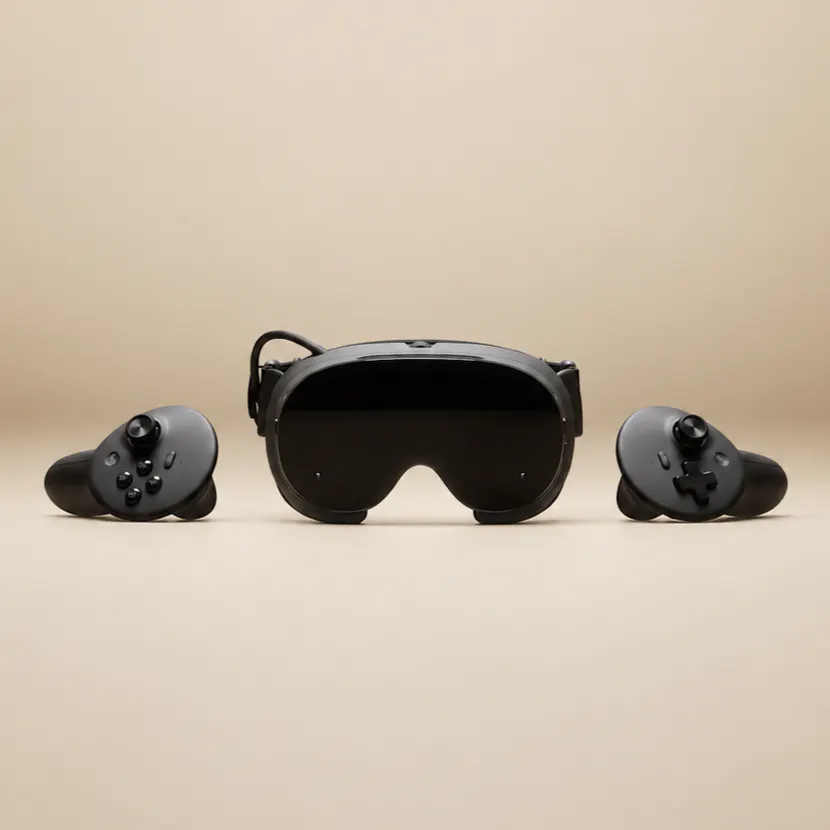 Steam Frame landed at rank four with 152 votes and 4 comments, and it immediately reads as one of the most concrete hardware stories on the day. The product is a wireless SteamOS headset that streams a user’s library from a PC, Deck, or Machine, while also running standalone titles. In plain terms, it positions itself as a wearable PC for games, backed by dual radios and an included adapter meant to keep streaming stable. The controllers also double as VR wands and a full gamepad, which broadens the use case beyond a single mode of play.
What helped it stand out was not novelty alone, but the way it framed continuity. Instead of asking users to buy into an entirely new ecosystem, it extends Steam library ownership into a new form factor. That makes the product easier to understand for existing Steam users and helps explain why it earned such strong vote support even with limited comment volume. The launch feels like a reminder that hardware can still generate attention when it solves for compatibility, not just spectacle.
5Lull
 Lull took fifth place with 117 votes and 3 comments, and it stands out because it doesn’t try to be a generic meditation app at all. The product asks users to talk for a minute about what is actually on their mind, then writes a meditation from that input and reads it back in one of 11 voices. That is a clever positioning move: instead of library-based mindfulness, it offers highly personalized guidance anchored in the immediate emotional state of the user. It also uses Oura recovery data to shape the tone, and Apple Watch heart rate to show the settle afterward.
The launch likely benefited from turning meditation into something responsive rather than prepackaged. That matters because many wellness tools compete on content volume, while Lull competes on relevance. The combination of voice generation, wearable integration, and a short input loop makes the product easy to explain in one sentence, which is usually a good sign for launch-day traction. The modest comment count suggests interest without a flood of skepticism, which can happen when the product is unusual but still tightly scoped.
6Squirrel
 Squirrel earned 109 votes and 10 comments for a product that turns app distraction into a financial decision. It is an app blocker that does not simply hide the tempting thing; it assigns a cost to opening it. Tap Instagram and you hit a hard block. If you want to check a direct message, you have to open Squirrel, choose a duration, and set aside a few dollars for yourself first. The product also makes a point of saying no money moves through the app, no card or bank account is connected, and users can later invest the money themselves and track holdings inside the app.
That framing does a lot of work. It replaces passive restriction with a behavioral nudge that feels more adult and more accountable than a standard screen-time warning. The comment count suggests this is the kind of product that prompts discussion because people immediately map it onto their own habits. Its vote total may not be as high as the top entries, but the positioning is memorable, and memorability matters in a crowded productivity category. Squirrel succeeded by making the cost of distraction visible instead of abstract.
7Doneit 3.2
 Doneit 3.2 placed seventh with 101 votes and 2 comments, a quieter result that still reflects steady interest in AI-assisted planning. The update centers on Doneit Assist, which can now accept photos when planning tasks, turning handwritten notes, whiteboards, and documents into structured work items. It can also suggest reminders and attributes, break tasks into subtasks, create summaries, highlight key tasks, and surface upcoming items in a list. In other words, it is pushing further into the messy front end of task capture rather than just improving the list view itself.
The launch positioning is strong because it speaks to a universal administrative headache: turning scattered intent into something actionable. By supporting Siri AI and photo-based input, Doneit 3.2 tries to meet users where their work already exists, not where the app prefers it to exist. The relatively low comment count suggests a product that is appreciated more as a practical upgrade than as a lightning rod. For founders, that is still meaningful. Incremental utility can be a launch advantage when it solves a process that people repeat every day.
8VoiceCap
 VoiceCap came in eighth with 100 votes and 5 comments, and it makes a sharp claim in a crowded category: AI notetaking for meetings in your language, not just in English. It transcribes in more than 100 languages and writes summaries, action items, and decisions in that same language. Users can record locally through native apps, send a bot to Zoom, Meet, or Teams, or upload a file. The product also adds an MCP path for asking Claude or ChatGPT about the meeting record, which gives it an obvious workflow edge for teams already living in AI tools.
What likely helped VoiceCap break through is the specificity of its trust and localization story. It is an EU company, stores recordings in Frankfurt, and says the data is never used to train models. That kind of positioning matters in international teams where compliance, language quality, and retention policies are not edge cases. The vote count is strong enough to show demand, and the comment volume suggests there is genuine interest in how well it handles multilingual work in practice. It feels like a product designed for a global market that often gets treated as an afterthought.
9Ruby UTCP
 Ruby UTCP ranked ninth with 95 votes and just 1 comment, making it one of the quieter launches on the board but also one of the most technically specific. The product brings UTCP 1.1 to Ruby and presents itself as a scalable, secure alternative to MCP for tool calling. It supports a long list of transports, including HTTP, CLI, WebSocket, gRPC, GraphQL, MCP, and WebRTC, along with streaming, auth, OpenAPI discovery, and CodeMode for multi-tool workflows. For Ruby developers building AI-native apps, that is a very concrete toolkit rather than a vague platform promise.
This launch likely appealed to a narrower but highly relevant audience. The low comment count fits a technical infrastructure product: the people who care about it probably understand it quickly, while everyone else scrolls past. Still, the vote count shows that builders are paying attention to protocol-level tooling, especially when it is open source and connected to the Ruby ecosystem. The launch also reflects a broader pattern on the day: the strongest technical products did best when they were anchored in a clear use case instead of abstract architecture talk.
10Basedash Models
 Basedash Models rounded out the top 10 with 91 votes and 2 comments. Its premise is familiar to anyone who has watched analytics teams struggle with duplicated definitions: define business concepts once, then query them like tables. It is a semantic workspace of reusable, governed SQL for core ideas like customers, orders, and active accounts, with dedicated views for details, columns, measures, segments, synonyms, row grain, relationships, and usage guidance. The assistant can read that guidance when it answers, and users can reference a model directly in SQL as if it were a table.
What makes this launch interesting is that it solves a coordination problem as much as a technical one. Data teams do not just need faster queries; they need shared definitions that prevent every dashboard and analyst from drifting in its own direction. Basedash Models positions itself as infrastructure for consistency, and that is usually the kind of product that earns respect even when it does not spark a large comment thread. The vote total suggests solid interest from a serious audience, especially from teams that know how expensive semantic sprawl can become.
What founders can learn from this launch day
The clearest lesson from 2026-09-19 is that specificity still wins. The launches that rose highest were not trying to be everything to everyone. Bolt Forge had a sharp usage story. Mantra Timer was explicitly minimalist. Lumiko eliminated editing steps. VoiceCap focused on language coverage and trust. Even the more technical products, like Ruby UTCP and Basedash Models, succeeded by naming a real pain point and explaining the mechanic that addressed it.
A second pattern is that friction reduction remains a powerful launch strategy. Several of these products succeeded because they removed a layer of work that users had quietly accepted as normal. No daily caps. No account required. No keyframes. No uploads. No training on your data. No subscription fatigue. Founders often think they need bigger claims, but launch day rewarded smaller promises that directly improved the workflow.
There is also a useful lesson in audience targeting. Some launches were broad enough to attract wide vote totals, while others spoke to a smaller but more technically literate group and still earned solid traction. That balance matters. A product does not need universal appeal to perform well on Product Hunt. It needs a message that is easy to understand, easy to repeat, and rooted in a problem people already recognize. On this day, the launches that did that best were the ones that looked least generic.
